Postpartum Hair Loss: Causes, Timeline, and What Actually Helps
What is postpartum hair loss and is it normal?
Postpartum hair loss is increased hair shedding after pregnancy, not instant permanent hair loss. In most cases, it is a normal and temporary response to the hormone shifts that happen after birth.
The medical term often used here is telogen effluvium, which means a larger-than-usual number of hairs move into the resting and shedding phase at the same time. During pregnancy, higher estrogen levels can keep more hairs in the growth phase longer than usual. After delivery, that pattern changes, and those hairs shed over the following months.
That delayed shedding can feel alarming, especially when it comes out in handfuls in the shower. But postpartum hair loss is common, and for many people it improves with time. The important nuance is that "common" does not mean every case should be ignored. If the shedding is extreme, patchy, or lasts much longer than expected, it is worth checking in with a clinician.
What postpartum hair loss usually looks like
Postpartum hair loss usually looks like diffuse shedding across the scalp rather than bald patches. Most people notice more hair in everyday places before they notice a true change in density.
Common signs include:
- More hair in the shower drain
- More strands in your brush or comb
- Hair on your pillow or clothing
- A ponytail that feels thinner
- A part that looks wider than it did before
- Fine short regrowth, sometimes called baby hairs, along the hairline later on
Healthy shedding is normal. Most people lose roughly 50 to 100 hairs a day. Postpartum shedding feels different because the volume is clearly higher and lasts for weeks rather than a day or two.
What causes postpartum hair loss?
Postpartum hair loss is mainly caused by the hormonal shift that happens after birth, especially the drop in estrogen. That change resets the hair cycle and pushes more hairs into the shedding phase.
Hair grows in phases: anagen is the growth phase, catagen is the transition phase, telogen is the resting phase, and exogen is the shedding phase. During pregnancy, more hairs stay in anagen longer, which is one reason hair often looks fuller. After delivery, many of those hairs move together into telogen, then shed later.
That is the core mechanism, but it is not the only variable. Shedding may feel worse when other stressors are layered on top of postpartum recovery, such as:
- Sleep deprivation
- Physical stress from labor and healing
- Illness or infection
- Low iron or ferritin
- Calorie restriction
- Nutritional depletion
- Emotional stress or anxiety
- Thyroid changes after pregnancy
A good overview of postpartum telogen effluvium starts with that idea: the shedding is often delayed, and the trigger is usually earlier than it looks.
Why postpartum shedding often starts 2 to 4 months after birth
Postpartum shedding usually starts 2 to 4 months after delivery because hair responds on a biological lag. The stressful or hormonal event happens first, but the visible shedding shows up later.
This delay confuses a lot of people. They expect hair loss to start right after childbirth, not months later. But hair follicles operate on a cycle. When hormones shift after birth, many hairs move into telogen at the same time. Those resting hairs are then shed weeks to months later.
That is why someone can feel fine at six weeks postpartum, then suddenly notice major shedding around month three. It does not mean something new went wrong at month three. It often means the postpartum shift is finally becoming visible.
Can breastfeeding cause postpartum hair loss?
Breastfeeding is not usually the direct cause of postpartum hair loss. The more likely driver is the normal postpartum hormone shift, though breastfeeding can overlap with other factors that affect hair health.
For some people, breastfeeding comes with higher calorie and nutrient demands, less sleep, more stress, and a longer recovery window. Those factors can make shedding feel more intense or make regrowth feel slower. But breastfeeding itself is not generally considered the primary reason hair starts falling out.
If you are breastfeeding and thinking about a supplement, talk with your healthcare provider first. That matters even with non-prescription products, because postpartum recovery, nursing, and medication use can change what makes sense for you.
When does postpartum hair loss stop and will hair grow back?
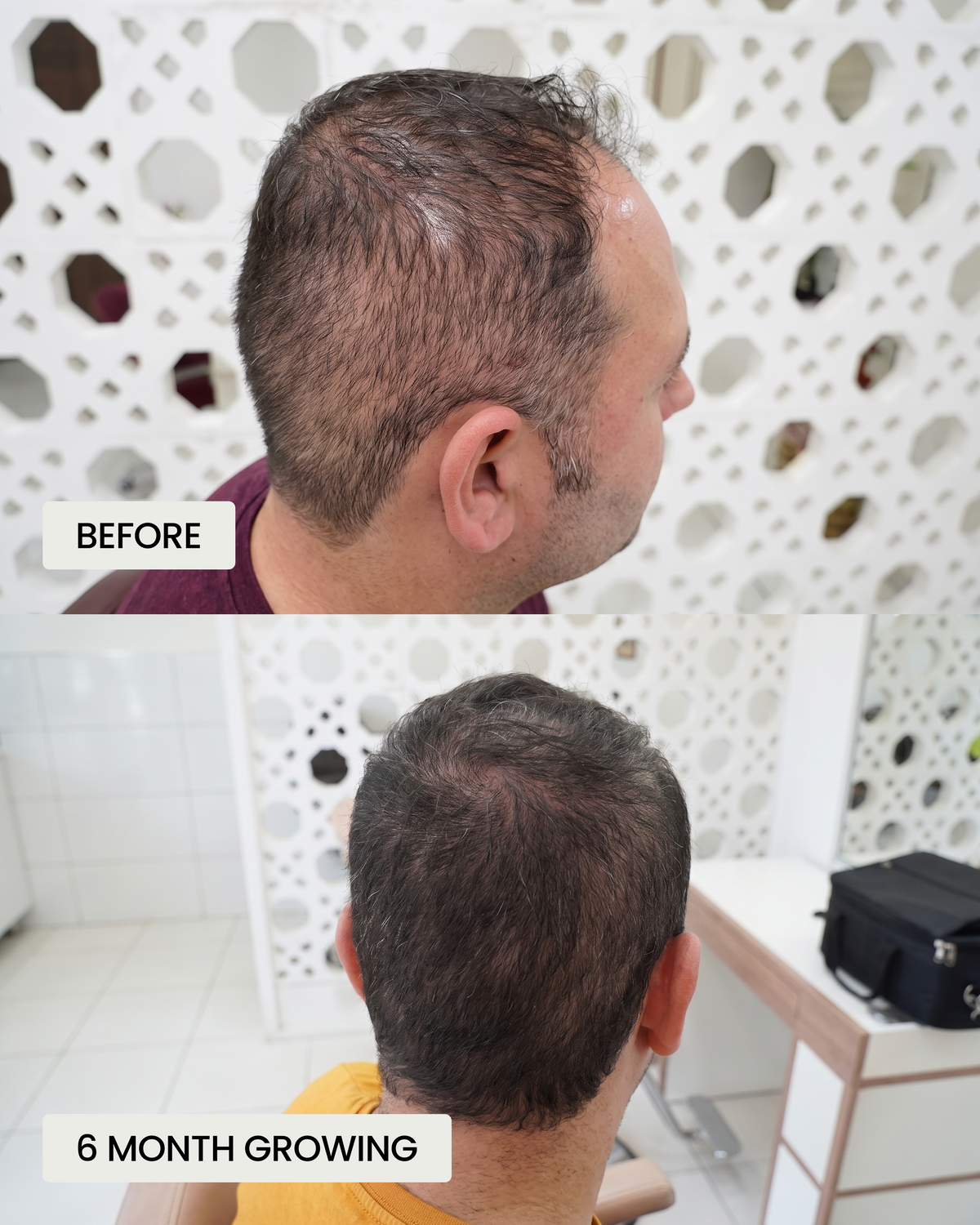
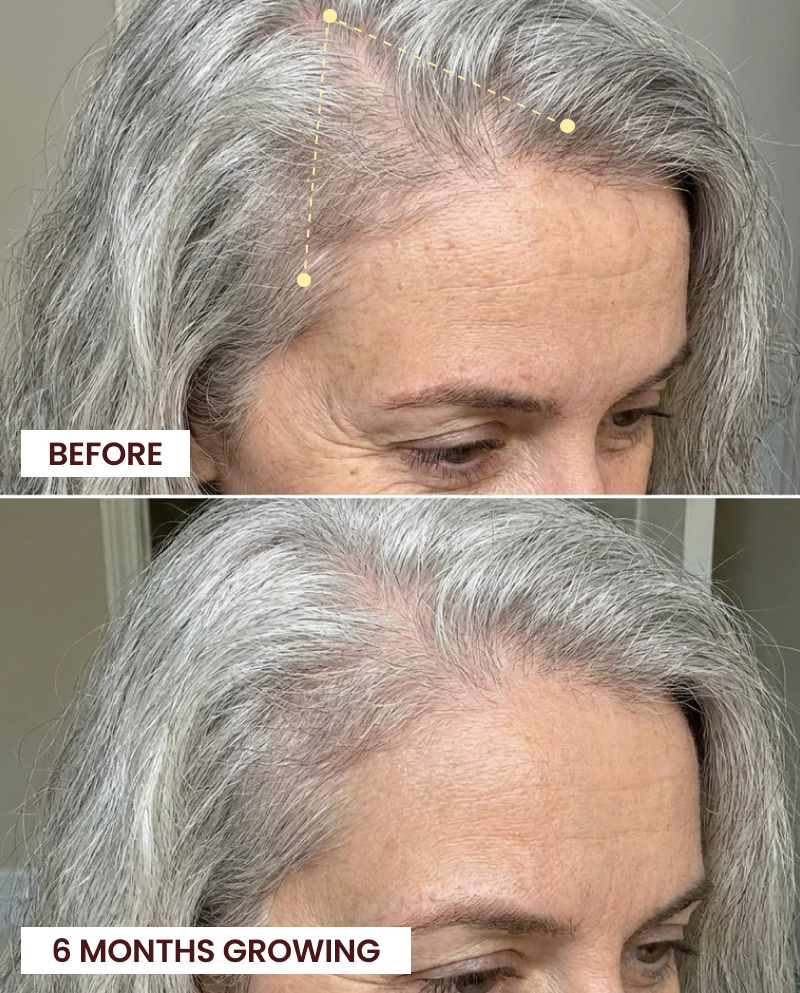
Postpartum hair loss often starts around months 2 to 4 after birth, peaks around months 4 to 6, and improves over the following several months. In many cases, regrowth does happen, but it takes time and rarely looks dramatic week to week.
For most people, the first sign of improvement is less shedding, not instant fullness. After that, short regrowth often appears around the hairline, temples, or part. These fine strands can stick up at first, which is frustrating cosmetically but usually a good sign that the cycle is restarting.
Recovery is not identical for everyone. If you had low iron, thyroid changes, significant stress, or underlying pattern thinning before pregnancy, the timeline can stretch out.
A realistic postpartum hair loss timeline
A realistic timeline helps because postpartum shedding can feel endless when you are in the middle of it. The table below reflects what many people experience, though individual recovery varies.
| Time after birth | What may happen |
|---|---|
| 0 to 2 months | Hair may still seem full or unchanged |
| 2 to 4 months | Shedding often begins and becomes noticeable |
| 4 to 6 months | Shedding may peak |
| 6 to 12 months | Shedding often slows and regrowth becomes easier to spot |
| 12+ months |
Many people improve by this point, but persistent thinning deserves a medical check-in
What regrowth can look like:
- Short hairs along the hairline
- Fuzzier growth near the temples
- A slightly narrower part over time
- A fuller-feeling ponytail months later
The key point is pace. Hair recovery is measured in months, not days.
When postpartum hair loss may need a medical check-in
Postpartum hair loss deserves medical attention if it looks unusual, lasts too long, or comes with other symptoms. Not every case is just routine postpartum shedding.
Consider a check-in if you notice:
- Patchy areas rather than diffuse shedding
- Significant shedding continuing beyond a year postpartum
- Redness, scaling, pain, or itching on the scalp
- Sudden severe thinning
- Fatigue, palpitations, dizziness, or feeling unusually cold
- Signs of thyroid issues or iron deficiency
A clinician may look at factors such as ferritin, thyroid-stimulating hormone, vitamin D, and overall recovery status. The AAD hair loss guidance can also help explain when shedding is expected and when it is worth a closer look.
Postpartum hair loss treatment: what actually helps?
Postpartum hair loss treatment is mostly about support, not a miracle fix. Because postpartum telogen effluvium often improves with time, the goal is usually to support healthy regrowth, reduce added stress on the hair, and rule out problems that may be prolonging the shedding.
What can realistically help:
- Adequate protein and overall calorie intake
- Replacing low iron or other deficiencies if testing shows them
- Gentle hair care that reduces breakage
- Managing stress where possible
- Medical review if shedding is prolonged or unusual
It also helps to separate true treatment from hopeful overreaction. Buying five new serums at once usually adds expense, not clarity.
Do postpartum hair loss vitamins help?
Postpartum hair loss vitamins may help if nutritional gaps are part of the picture, but they are not a guaranteed fix for every case. If your shedding is mostly being driven by the normal postpartum hormone shift, a supplement may support recovery but will not override the hair cycle overnight.
This is where category-level thinking matters. A simple multivitamin or postpartum vitamin may be enough for some people, especially if diet has been inconsistent during recovery. In other cases, a more targeted formula may be worth considering when shedding overlaps with stress, inflammation, or early hormonal thinning that was already present before pregnancy.
| May help when | Unlikely to do much when |
|---|---|
| Iron, vitamin D, or zinc intake is low | The issue is purely time-limited shedding and nutrition is already solid |
| Recovery has included poor appetite or restricted eating | There is a thyroid disorder or another untreated medical issue |
| Sleep stress and physical recovery are affecting overall health | The expectation is full regrowth in a few weeks |
Hair care habits that reduce breakage while shedding improves
Gentle hair care will not stop postpartum shedding, but it can reduce breakage and make regrowth easier to protect. That matters because fragile new hairs are easy to snap.
Helpful habits include:
- Avoid very tight ponytails, buns, or braids
- Use lower heat when possible
- Detangle gently, especially when hair is wet
- Limit aggressive brushing
- Be careful with extensions or styles that pull at the hairline
- Choose softer hair ties instead of tight elastics
This part is worth emphasizing: breakage and shedding are not the same thing. Hair care changes mainly help with breakage, while postpartum shedding is happening at the follicle level.
When a supplement may fit into a postpartum hair recovery plan
A supplement may fit into a postpartum hair recovery plan when you want systemic support and your shedding pattern looks consistent with postpartum telogen effluvium. It makes more sense as a support tool than as a rescue promise.
Some formulas are built around just one idea, usually a single nutrient. Others try to support several contributors at once, such as nutritional gaps, inflammation, stress pathways, and hormone-related follicle stress. The Root Co. Hair Growth Vitamins fall into that second category. The formula is taken as \*\*2 capsules daily\*\*, one with breakfast and one with dinner, and the brand positions it around four causes of hair loss: DHT (dihydrotestosterone), nutritional gaps, scalp inflammation, and stress damage.
That does not mean postpartum shedding is always a DHT problem or that one supplement is right for every new parent. It means a multi-factor formula may be worth considering when postpartum recovery is overlapping with stress, nutrient depletion, or pre-existing thinning. The brand also cites US Patent #11,160,750, an independent clinical reference presented to the International Society of Hair Restoration Surgeons, and a 30-day money-back guarantee. You can review The Root Co. Hair Growth Vitamins if that framework matches what you are looking for.
What an oral supplement can and cannot do for postpartum hair loss
An oral supplement cannot regrow fuller hair in a few weeks, and it cannot replace medical evaluation when something more serious may be going on. What it may do is support healthier regrowth over time, especially when nutrition, stress, and follicle environment are part of the picture.
This ceiling matters. Supplements work best when follicles are still active and the main issue is shedding or early thinning. They are less useful when hair loss is patchy, driven by an untreated medical condition, or part of a diagnosis that needs direct care.
Consider it if / consider something else if
Consider a supplement if your shedding looks consistent with postpartum telogen effluvium and you want steady, systemic support during recovery.
Consider it if:
- Shedding started about 2 to 4 months after birth
- Loss is diffuse rather than patchy
- You want support beyond basic hair care alone
- You are willing to give it 3 to 6 months, not 3 weeks
Consider medical evaluation first if the pattern does not look like routine postpartum shedding.
Consider something else first if:
- Hair loss is patchy or painful
- Shedding is still severe beyond 12 months postpartum
- You have fatigue, dizziness, thyroid symptoms, or other systemic changes
- You are pregnant, nursing, or taking medication and have not checked supplement safety with your clinician
These statements have not been evaluated by the Food and Drug Administration. This product is not intended to diagnose, treat, cure, or prevent any disease.
If you are pregnant, nursing, taking prescription medication, or experiencing sudden or significant hair loss, consult your healthcare provider before adding a new supplement to your routine. Sudden hair loss can sometimes be a sign of an underlying condition worth investigating.
FAQ
When does postpartum hair loss stop?
Postpartum hair loss often starts around 2 to 4 months after birth, peaks around 4 to 6 months, and gradually improves after that. Many people see meaningful improvement within 6 to 12 months, though recovery can take longer if iron deficiency, thyroid issues, high stress, or underlying pattern thinning are involved.
Do postpartum hair loss vitamins actually work?
Postpartum hair loss vitamins can help when nutritional gaps are contributing to shedding, but they are not a cure-all. They are most useful as support, especially if recovery has included poor sleep, inconsistent eating, or depleted nutrient stores. They are less likely to help if a medical issue is going untreated or if the expectation is instant regrowth.
Can breastfeeding cause postpartum hair loss?
Breastfeeding is not usually the direct cause of postpartum hair loss. The main driver is usually the hormone shift after pregnancy. Breastfeeding can overlap with higher nutrient demands, stress, lower sleep, and slower recovery, which may affect how your hair feels during the postpartum period.