
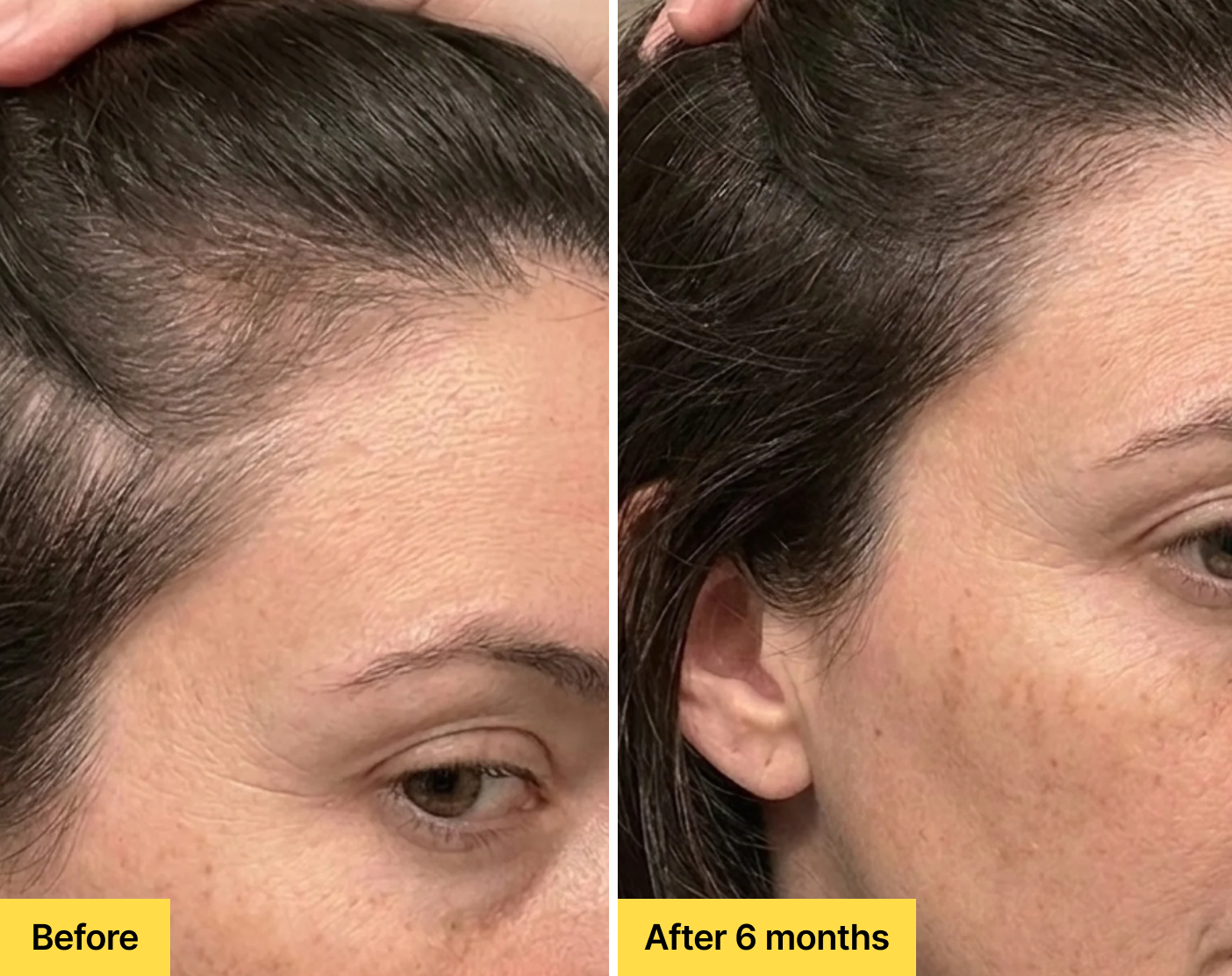
Hair Thinning vs Hair Loss: How to Tell the Difference and What to Do Next
What is the difference between hair thinning vs hair loss?
Hair thinning usually means reduced density across part of the scalp or the whole scalp, while hair loss can include excessive shedding, a receding hairline, patchy bald spots, or areas that are no longer regrowing normally. People often use the terms interchangeably, but the pattern, speed, and likely cause are not always the same.
That distinction matters because the next step is different for each one. Gradual diffuse thinning may point to androgenetic alopecia, age-related hormonal changes, or chronic stress. Sudden shedding or patchy loss is more likely to need medical attention. This guide will help you match the pattern you are seeing to the most likely category, understand what may be reversible, and know when to stop guessing.
Hair thinning: what it usually looks like
Hair thinning often shows up as less hair density rather than obvious bald spots. It tends to be gradual, which is why many people notice it late.
Common signs include:
- A wider center part
- Less volume at the roots
- A smaller ponytail circumference
- More scalp showing under bright bathroom light
- Hair that feels flatter even when freshly washed or styled
- Slower recovery of fullness after shedding periods
This pattern is often called diffuse thinning, meaning the change is spread out rather than concentrated in one bare patch.
Hair loss: what it usually looks like
Hair loss is a broader term. It can include thinning, but it also includes more obvious changes in how hair is falling out or where it is disappearing.
Common signs include:
- Increased shedding in the shower, brush, or on clothing
- Recession at the temples
- Thinning at the crown
- Patchy bare spots
- A hairline that keeps moving back
- Areas that seem slower to regrow than they used to
When hair loss is sudden, patchy, painful, or inflamed, it moves out of the purely cosmetic category and into something worth evaluating more closely.
Hair shedding vs hair loss vs breakage
Hair shedding means hairs are falling from the root as part of the hair cycle. Hair loss means overall density is decreasing. Breakage means the strand is snapping somewhere along the shaft, often from heat, bleach, tight styling, or fragile hair fibers.
A quick way to tell the difference:
- Shed hairs often have a small white bulb at one end
- Broken hairs are shorter, uneven, and usually have no bulb
- Shedding affects density over time
- Breakage affects length, smoothness, and the look of the ends
If your sink is full of short snapped pieces, think breakage. If you are seeing full-length strands with bulbs and a visibly wider part, think shedding or hair loss.
How can you tell whether you have hair thinning or hair loss?
You can often get useful clues at home by looking at pattern, timing, and amount, even though you cannot diagnose yourself from a mirror. The goal is not certainty. It is noticing whether the change looks gradual, sudden, diffuse, patterned, or patchy.
Healthy people normally shed around \*\*50 to 100 hairs per day\*\*. Shedding becomes more concerning when it stays visibly elevated for more than four to six weeks, especially if you also notice reduced density, a widening part, or recession.
Signs of hair thinning that often show up first
Early hair thinning usually appears before people see dramatic fallout. It is more about reduced fullness than obvious shedding.
Look for:
- A part that looks wider in photos
- Roots that lie flatter than usual
- Less fullness when you style your hair
- More scalp visibility under direct light
- A ponytail that feels smaller over time
- Hair that does not seem to "bounce back" after a shedding phase
This is common in early androgenetic alopecia, also called pattern hair loss, where follicles gradually miniaturize. Miniaturization means the follicle produces finer, shorter hairs over successive cycles.
Signs of hair loss that deserve closer attention
Hair loss deserves more attention when the pattern is fast, focal, or paired with other body changes.
Signs that should make you pause:
- Sudden heavy shedding
- Clumps in the shower
- Noticeable temple recession
- Crown thinning
- Patchy circular spots
- Eyebrow thinning or reduced body hair
- Scalp discomfort, burning, or scaling
Those patterns do not automatically mean something serious is wrong, but they do make self-diagnosis less reliable.
A quick self-check: pattern, timing, and trigger
A practical self-check starts with three questions:
-
Where is the change happening?
Diffuse across the scalp, mainly at the part, at the crown, at the temples, or in patches? -
Did it start suddenly or gradually?
Sudden shedding often points toward telogen effluvium. Gradual thinning often points toward pattern hair loss. -
What was happening two to three months earlier?
That window matters because telogen effluvium (TE), a common form of temporary shedding, often starts two to three months after a trigger such as illness, childbirth, surgery, crash dieting, or intense stress.
What causes hair thinning vs hair loss?
Both hair thinning and hair loss can come from overlapping causes, but the pattern often gives useful clues. Gradual diffuse thinning leans one way. Sudden shedding, patchy loss, or inflamed scalp changes lean another.
Common causes of hair thinning
Hair thinning is often driven by slower, cumulative processes rather than one dramatic event.
Common causes include:
- Age-related hormonal shifts
- Androgenetic alopecia (AGA), also called pattern hair loss
- Perimenopause and menopause
- Postpartum hormonal change after the initial shed
- Chronic stress
- Repeated heat styling, bleaching, relaxing, or tight hairstyles
One of the biggest drivers here is DHT (dihydrotestosterone), a hormone derived from testosterone that can bind to follicle receptors and gradually shrink susceptible follicles over time.
Common causes of hair loss
Hair loss is more likely to be described when the change is sudden, heavy, patchy, or medically linked.
Common causes include:
- Telogen effluvium after illness, surgery, childbirth, or crash dieting
- Medication changes
- Autoimmune conditions such as alopecia areata
- Thyroid disorders
- Iron deficiency
- Traction alopecia from chronic pulling tension
- Severe scalp inflammation or infection
This is why a detailed history matters. Two people can both say "my hair is falling out" and still need very different answers.
Which vitamin deficiency causes hair loss?
There is no single vitamin deficiency that explains all hair loss, but low iron or low ferritin is one of the most common concerns clinicians check. \*\*Vitamin D, zinc, B12\*\*, and in some cases protein intake or other nutrient gaps may also contribute.
A better question than "which vitamin deficiency causes hair loss?" is: which deficiency is plausible for you based on symptoms, diet, bloodwork, and hair-loss pattern? Taking random supplements without checking the basics can waste time.
Nutrient-related shedding is one reason some people look for multi-factor formulas rather than biotin alone. The Root Co. Hair Growth Vitamins, for example, use 2 capsules daily and include zinc, magnesium, vitamin D3, and vitamin B5 alongside botanicals designed around DHT-related stress, inflammation, and stress pathways. That does not make them a diagnosis. It makes them a supportive option when multiple contributors may be in play.
When the cause may be more than cosmetic
Some patterns should not be brushed off as routine thinning.
Seek medical input sooner if you notice:
- Sudden diffuse shedding with no clear reason
- Patchy bald spots
- Scalp pain, burning, or tenderness
- Scaling, redness, or inflammation
- Hair loss with fatigue, weight change, or menstrual changes
- Hair changes after starting or stopping medication
These are the moments when lab work or a scalp exam matters more than another bottle of capsules.
Is hair thinning reversible, and can hair grow back after hair loss?
Often, yes, but not always fully and not always quickly. Reversibility depends on the cause, how long it has been happening, and whether the follicles are still active.
Temporary shedding and early miniaturization are very different situations. A follicle that is resting or under stress may recover. A follicle that has been miniaturized for years, scarred, or permanently damaged is harder to restore.
When hair thinning is often reversible
Hair thinning is often more reversible when the underlying cause is temporary or caught early.
Examples include:
- Stress-related telogen effluvium
- Postpartum shedding
- Iron or vitamin deficiency
- Illness-related shedding
- Early-stage pattern thinning
- Hair density loss from harsh styling habits
This is why timing matters. The earlier you address the cause, the more likely you are to support active follicles before they produce finer and finer hairs.
When regrowth is harder and slower
Regrowth is usually slower and less complete when thinning has been present for years, when miniaturization is advanced, or when there is scarring alopecia, meaning inflammatory damage has replaced the follicle with scar tissue.
In those cases, supplements alone are unlikely to be enough. You may need a dermatologist evaluation, prescription treatment, or procedure-based care. An oral supplement can support overall hair health, but it cannot regrow follicles that are permanently lost.
How long does it take to see improvement?
Hair improvement is measured in months, not weeks. Reduced shedding may show up first, but visible regrowth and density changes take longer.
A realistic timeline looks like this:
| Timeline | What may improve first | What usually takes longer |
|---|---|---|
| Weeks 4 to 8 | Less shedding, fewer hairs on clothes, in the brush, or in the shower | Visible density change is usually still limited |
| Months 2 to 4 | Baby hairs along the part or hairline, early signs of regrowth | Noticeable thickening across the scalp |
| Months 4 to 6+ | Improved fullness, narrower-looking part, denser ponytail | Meaningful cosmetic change in long-standing thinning |
What should you do next if you notice hair thinning or hair loss?
Start by identifying the pattern and possible trigger before jumping into treatment. The most useful plan is calm and structured: look at timing, rule out red flags, check for deficiencies when appropriate, and choose treatment based on cause.
When to see a doctor or dermatologist
See a clinician if hair loss is sudden, patchy, painful, inflamed, or rapidly getting worse. Also get evaluated if hair changes come with fatigue, weight shifts, irregular periods, or other systemic symptoms.
That kind of visit may include:
- A scalp exam
- Review of medications and recent stressors
- Bloodwork for ferritin, thyroid markers, vitamin D, and B12
- Assessment for autoimmune or inflammatory scalp conditions
Treatment options by cause
The best treatment depends on the cause, not the label on the bottle.
Common categories include:
- Nutrient correction for documented deficiencies
- Stress recovery and time for telogen effluvium
- Topical minoxidil for pattern hair loss in many people
- Prescription options such as finasteride, dutasteride, or spironolactone in appropriate cases
- Gentler hair care if breakage and traction are contributing
- Supportive oral supplements when nutritional, inflammatory, or stress-related factors overlap
What an oral supplement can and cannot do
An oral supplement may help support hair health when nutrient gaps, inflammation, or stress-related pathways are part of the picture. It does not replace diagnosis, and it cannot regrow follicles that have been permanently lost.
That limitation is worth stating clearly because it makes expectations more realistic. If your thinning is early to moderate and follicles are still active, a supplement may be a reasonable part of the plan. If you have advanced pattern hair loss or a scarring condition, it is usually just one piece of a larger approach.
Who may benefit from a multi-factor hair supplement
Some people do better with a formula that addresses several contributors at once rather than one narrow angle like biotin alone. That is especially relevant when thinning appears tied to a mix of DHT-related stress, nutrient gaps, inflammation, and stress pathways.
The Root Co. Hair Growth Vitamins fit that multi-factor category. The formula is built around those four mechanisms, comes in a 60-capsule bottle for a 30-day supply, and is taken as 1 capsule with breakfast and 1 with dinner. The brand also cites US Patent #11,160,750 and reports clinical outcomes such as 93% reduced shedding within 60 days and 88% visible regrowth by month 3 in its referenced study materials. That does not mean it is the right fit for everyone. It means it may be worth considering if your hair changes are early to moderate, diffuse, and likely driven by more than one factor.
If your hair loss is very sudden, very patchy, or long-standing with obvious bare areas, start with medical evaluation first.
These statements have not been evaluated by the Food and Drug Administration. This product is not intended to diagnose, treat, cure, or prevent any disease.
FAQ
Is hair thinning the same as hair loss?
Not exactly. Hair thinning usually means reduced density across the scalp, while hair loss can include shedding, recession, patchy bald spots, or overall density loss. Thinning is one form of hair loss, but not every kind of hair loss looks like gradual thinning.
Is hair thinning reversible?
Often, yes. Hair thinning is frequently reversible when it is linked to stress, postpartum changes, nutrient deficiency, or early-stage pattern thinning. It is less reversible when follicles have been miniaturized for a long time or permanently damaged.
Which vitamin deficiency causes hair loss?
Low iron or low ferritin is one of the most common concerns, but vitamin D, zinc, B12, and other nutrient gaps can also contribute. There is no one universal deficiency behind all hair loss, which is why lab work is often more useful than guessing.
How do I know if my hair is thinning or just shedding?
If you are shedding, you will notice more hairs falling out than usual. If you are thinning, you will notice less density over time, such as a wider part, smaller ponytail, or more visible scalp. Many people have both at the same time.
When should I worry about hair thinning or hair loss?
Worry is reasonable when hair changes are sudden, patchy, painful, inflamed, rapidly worsening, or paired with fatigue, weight change, or menstrual changes. Those patterns deserve medical evaluation rather than self-treatment alone.
Can hair thinning turn into permanent hair loss?
It can, depending on the cause. Early pattern thinning can progress if follicles keep miniaturizing over time. Temporary shedding, on the other hand, often improves once the trigger resolves. Catching the pattern early gives you more options.
Read more

A clear guide to nutrition for hair growth, including key nutrients, best foods, deficiency signs, supplements, and realistic timelines.
Learn what hair vitamins for thin hair can actually do, which nutrients matter, realistic timelines for results, and how to choose a formula without falling for hype.