
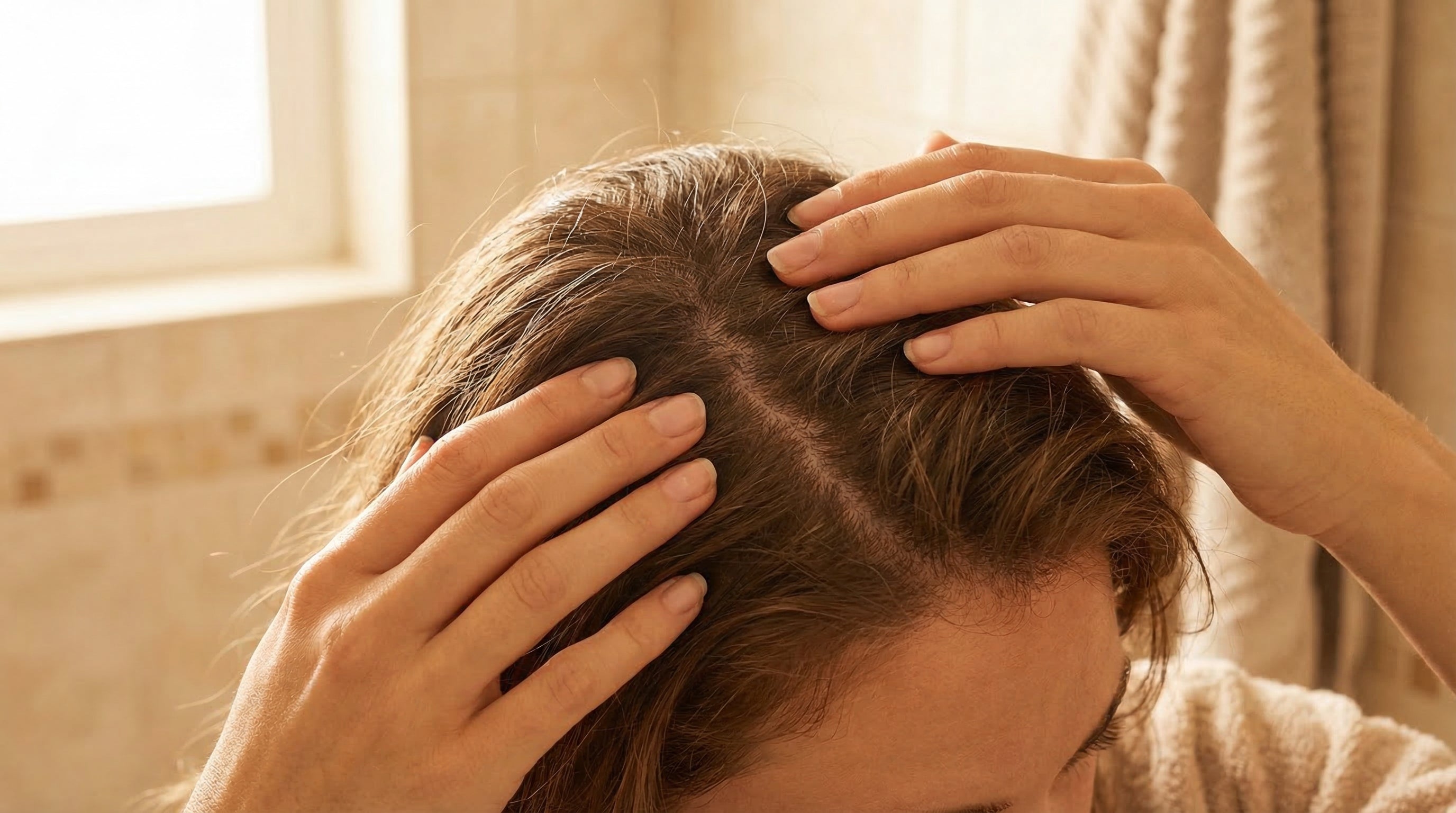
Hair Vitamins for Thin Hair: What Actually Helps, What to Expect, and How to Choose
What do hair vitamins for thin hair actually do?
Hair vitamins for thin hair may help when nutrient gaps, stress-related disruption, or early follicle stress are part of the picture. They are not a cure-all for every kind of hair loss, and they work best when the formula matches why your hair is thinning in the first place.
That distinction matters. Some people have naturally fine strands but normal density. Others have true thinning, meaning fewer hairs growing in a given area. Others are dealing with active shedding, breakage, or long-term pattern thinning driven by hormones. Those are different problems, and they do not respond the same way.
In plain English, hair grows on a cycle. A follicle spends time growing, pauses, rests, and then sheds before starting again. Because of that biology, a supplement cannot create visible change in two weeks. If it helps, it usually helps gradually over several months.
A good article on hair vitamins for thin hair should leave you less overwhelmed, not more. The real question is not "what is the strongest bottle on the shelf?" It is "what is likely driving my thinner hair?"
Thin hair vs. thinning hair: why the distinction matters
Thin hair can describe strand texture, density loss, or active shedding, and those are not the same thing. Getting the label right helps you choose the right next step.
- Naturally fine hair means each strand is small in diameter. You may have always had soft, delicate hair, but not necessarily hair loss.
- Reduced density means fewer hairs overall. Your ponytail feels smaller, your scalp shows more easily, or your part looks wider.
- Diffuse thinning means the density drop is spread across a broad area rather than a single bald patch.
- Widening part often points to gradual pattern thinning, especially in women.
- Telogen effluvium is stress- or event-related shedding that often starts two to three months after childbirth, illness, surgery, grief, major stress, or a medication change.
If your issue is mostly breakage from bleach, heat, or tight styling, a vitamin may play only a supporting role. If your issue is active shedding or reduced density, an oral formula may be more relevant.
How the hair cycle affects supplement results
The hair cycle explains why supplements take months, not weeks, to show visible results. Even when a product is helping, hair still has to move through a slow biological process.
The four main phases are:
- Anagen: the active growth phase
- Catagen: the brief transition phase
- Telogen: the resting phase
- Exogen: the shedding phase
If stress, inflammation, hormonal shifts, or nutrient shortfalls push more hairs into telogen and exogen, you notice more fallout in the shower, on your pillow, or on your brush. A supplement may help support healthier cycling, but it cannot skip the timeline. New growth has to emerge, lengthen, and become visible enough to affect thickness and coverage.
For a plain-language overview of how shedding works, the AAD hair loss guidance is a useful reference point.
Which vitamins and minerals matter most for hair growth and thickness?
The vitamins and minerals most relevant to hair are the ones tied to actual shortfalls, not the ones marketed most aggressively. Hair-support formulas tend to make the most sense when they address real nutritional or physiological contributors to thinning.
The nutrients most often discussed in hair health include vitamin D, iron, zinc, magnesium, B vitamins, and adequate protein intake. None of these acts like a magic switch. They support the conditions hair follicles rely on.
Nutrients linked to hair thinning and shedding
Several nutrient gaps can affect the hair cycle, follicle function, or the amount of shedding you notice. That does not mean every person with thin hair is deficient, but it is one reason bloodwork can be useful when thinning is new or persistent.
| Nutrient | Why it matters for hair | When it may matter most |
|---|---|---|
| Vitamin D | Supports normal follicle cycling and is often discussed in diffuse shedding workups | Low sun exposure, low lab values, ongoing shedding |
| Iron | Low iron or ferritin can contribute to shedding and reduced growth support | Heavy periods, postpartum recovery, fatigue, restrictive diets |
| Zinc | Supports normal cell function and hair-follicle activity | Restricted diets, low intake, slow recovery from shedding |
| Magnesium | Supports broad metabolic and stress-related pathways relevant to hair health | High stress, low dietary intake, general nutritional support |
| B vitamins | Help support energy metabolism and normal tissue turnover | Inadequate diet, recovery periods, broad nutritional support |
| Protein intake | Hair is made primarily of keratin, so inadequate protein can limit growth support | Crash dieting, low-protein eating patterns, illness recovery |
A broader dermatology review on nutritional factors in hair loss helps explain why correcting a deficiency matters more than taking random extras.
Why biotin is not the whole story
Biotin is not useless, but it is rarely the whole answer for thin hair. Biotin deficiency is uncommon, and many popular hair supplements rely on it far more than the evidence for most users really supports.
That is why so many people feel disappointed after finishing a biotin bottle. If thinning is connected to hormonal change, DHT (dihydrotestosterone) activity, stress-related cycling disruption, inflammation, or non-biotin nutrient gaps, biotin alone may not do much.
This is also why "more ingredients" is not automatically better. A crowded label can still miss the real issue.
What a stronger hair formula looks like
A stronger hair formula usually has a clear mechanism, not just a long ingredient list. The better question is whether the formula explains what problem it is trying to solve.
For many readers, that means looking beyond beauty-positioned blends and toward formulas that address multiple contributors at once:
- nutrient support for common shortfalls
- support around DHT-related follicle stress
- support for inflammation-related scalp environment issues
- support for stress pathways that can affect shedding
That multi-cause logic is the basis of The Root Co.'s four-cause framework.
Who are the best hair vitamins for thin hair actually for?
Hair vitamins are usually a better fit for early to moderate thinning than for long-standing bald areas. They tend to make the most sense when follicles are still active and the problem involves shedding, miniaturization, stress disruption, or nutrient support.
They can be especially relevant for:
- postpartum shedding
- perimenopausal or menopausal thinning
- stress-related shedding after illness, grief, or major life events
- early pattern thinning in women and men
- gradual density loss after dieting, illness, or nutritional gaps
When vitamins can be a reasonable first step
Vitamins can be a reasonable first step when the thinning is early, diffuse, or tied to a known stressor or recovery period. In those cases, a supplement may be a practical, lower-commitment way to support hair health while you monitor progress.
This is often where supplements for hair loss in females come up most often. Women dealing with postpartum telogen effluvium, hormonal changes, or a widening part may want an oral option before moving to prescriptions or procedures. Men with early crown or frontal thinning may also consider a supplement, especially if they want a non-pharmaceutical starting point.
When vitamins are probably not enough on their own
Vitamins are probably not enough if the hair loss is sudden, patchy, scarred, or severe. Those patterns deserve medical evaluation rather than repeated supplement switching.
Get medical input first if you have:
- sudden or dramatic shedding with other symptoms
- patchy bald spots
- scalp pain, burning, or scarring
- hair loss after a medication change
- long-standing shiny bald areas
- signs of thyroid issues, anemia, PCOS, or autoimmune disease
If you are pregnant, nursing, taking prescription medication, or experiencing sudden or significant hair loss, consult your healthcare provider before adding a new supplement to your routine. Sudden hair loss can sometimes be a sign of an underlying condition worth investigating.
How to choose the best hair vitamins for thin hair
The best hair vitamins for thin hair are the ones with clear ingredients, a coherent mechanism, and realistic claims. A calm buying framework usually works better than chasing whichever bottle promises the fastest growth.
What to look for on the label
A good label tells you what is in the formula, how much you take, and what the formula is trying to address. If a supplement hides behind vague blends or oversized promises, that is usually a warning sign.
Look for:
- clear ingredient forms, not just marketing names
- exact daily serving and capsule count
- a mechanism you can understand
- allergen and dietary information
- manufacturing standards such as GMP-certified production
- a reasonable refund policy
- no obvious filler strategy built around one overmarketed ingredient
Also be skeptical of "faster growth" language. No product can speed human hair biology unrealistically. The honest goal is usually reduced shedding first, then visible regrowth and thickness over time.
How The Root Co. fits into the category
The Root Co. Hair Growth Vitamins are worth considering for adults with early to moderate thinning who want a capsule formula built around more than one cause of hair loss. The formula is positioned around four contributors: DHT activity, nutritional gaps, scalp inflammation, and stress damage.
What is specific and verifiable here:
- Format: 60 capsules per bottle, 30-day supply
- Dosage: 2 capsules daily, 1 with breakfast and 1 with dinner
- Actives: açai berry extract, green coffee bean extract, olive leaf extract, pau d'arco extract, zinc picolinate, magnesium citrate, vitamin D3, and vitamin B5
- Patent: US Patent #11,160,750
- Clinical reference: an independent study presented to the International Society of Hair Restoration Surgeons
- Reported outcomes from brand documentation: 93% reduced shedding within 60 days, 88% visible regrowth by month 3, 2x hair count by month 4, 3x hair count by month 9
- Other details: vegetarian capsules, made in the USA, GMP-certified facility, 30-day money-back guarantee
The brand is newer than long-established names like Nutrafol or Viviscal, so it does not have the same depth of long-term published data. Its case rests more on the patented formula, the clinical reference, and the fact that it is not just another biotin- or keratin-led product. Readers who want the brand details can review The Root Co. Hair Growth Vitamins.
Consider it if, consider something else if
Consider The Root Co. if you want a multi-cause supplement and are willing to give it several months. Consider something else if your situation clearly calls for medical treatment first.
Consider it if:
- your thinning is early to moderate
- your shedding seems stress-, hormone-, or nutrition-linked
- you are skeptical of biotin-only or keratin-only formulas
- you want a vegetarian capsule format
- you value a 30-day guarantee
Consider something else first if:
- you have patchy or sudden hair loss
- you may have scarring alopecia
- you have advanced long-term bald areas
- you likely need prescription treatment, a procedure, or a dermatologist evaluation
How long do hair vitamins take to work, and what are their limits?
Hair vitamins usually take months to show meaningful results, and reduced shedding often comes before visible regrowth. That slower timeline is normal, not a sign that nothing is happening.
A realistic timeline for results
An honest timeline starts with less shedding, then short regrowth, then thicker-looking hair over time. Most people need at least three months of consistent use to judge whether a supplement is helping.
| Timeline | What you may notice | How to interpret it |
|---|---|---|
| Month 1 to 2 | Less hair in the shower, brush, or on clothing | Reduced shedding is often the first sign of progress |
| Month 2 to 3 | Short regrowth or "baby hairs" near the part or hairline | New growth tends to appear before overall thickness changes |
| Month 3 to 4 | Hair looks fuller, part may appear a bit narrower | Visible thickening usually takes several growth cycles |
| Month 6+ | More noticeable density, better ponytail fullness, improved coverage | Longer-term consistency matters most here |
What hair vitamins cannot do
Hair vitamins cannot replace medical treatment for every condition, and they cannot restore follicles that are permanently inactive. That ceiling is important.
A supplement is unlikely to:
- regrow hair on scarred or permanently lost follicles
- act like a prescription finasteride or minoxidil replacement in advanced pattern loss
- treat autoimmune hair loss
- reverse years of severe baldness on its own
- fix an untreated thyroid disorder, iron deficiency, or other medical cause without broader care
This is where honesty matters more than optimism.
What to do if your hair is still thinning
If your hair is still thinning after a fair trial, do not just keep buying new bottles. Review the basics first.
Ask:
- Have I used it consistently for at least 3 months?
- Am I eating enough overall, especially enough protein and iron-rich foods?
- Did a major stressor, illness, childbirth, or medication change happen 2 to 3 months before the shedding began?
- Do I need bloodwork for ferritin, vitamin D, thyroid function, or B12?
- Is my pattern suggesting androgenetic alopecia rather than temporary shedding?
If the answer is unclear, a dermatologist can help sort out whether you are dealing with telogen effluvium, pattern hair loss, traction, inflammation, or something that needs treatment beyond supplementation.
These statements have not been evaluated by the Food and Drug Administration. This product is not intended to diagnose, treat, cure, or prevent any disease.
FAQ
What are the best hair vitamins for thin hair?
The best hair vitamins for thin hair are the ones that match the reason your hair is thinning. For some people that means correcting a nutrient shortfall. For others it means a broader formula that also addresses DHT-related stress, inflammation, and stress pathways. A clear label and realistic mechanism matter more than hype.
Do hair vitamins really help with thinning hair?
They can help, especially when thinning is linked to nutritional gaps, stress-related shedding, postpartum recovery, or early pattern thinning. They are less likely to help on their own in advanced baldness, scarring alopecia, or clearly medical causes of hair loss.
How long does it take for hair vitamins to make hair thicker?
Most people need at least 3 months to assess visible thickening. Reduced shedding often shows up first within 1 to 2 months, while fuller-looking hair and density changes usually take several more months.
What deficiency causes thin hair in females?
There is no single deficiency that explains all thin hair in females, but low iron, low ferritin, vitamin D insufficiency, and some broader nutritional gaps are commonly discussed in workups for shedding and diffuse thinning. Hormonal and genetic factors also matter.
Is biotin or vitamin D better for thin hair?
Neither is universally "better." Biotin can help if you are actually biotin-deficient, but that is uncommon. Vitamin D may be more relevant in some cases of diffuse thinning or shedding, especially if lab work shows a low level. The right answer depends on your specific shortfalls.
Can hair vitamins regrow hair in bald spots?
Sometimes they may help with early thinning where follicles are still active, but they are not reliable for long-standing bald spots or scarred areas. If an area has been completely bare for years, a supplement is unlikely to restore it on its own.
Read more
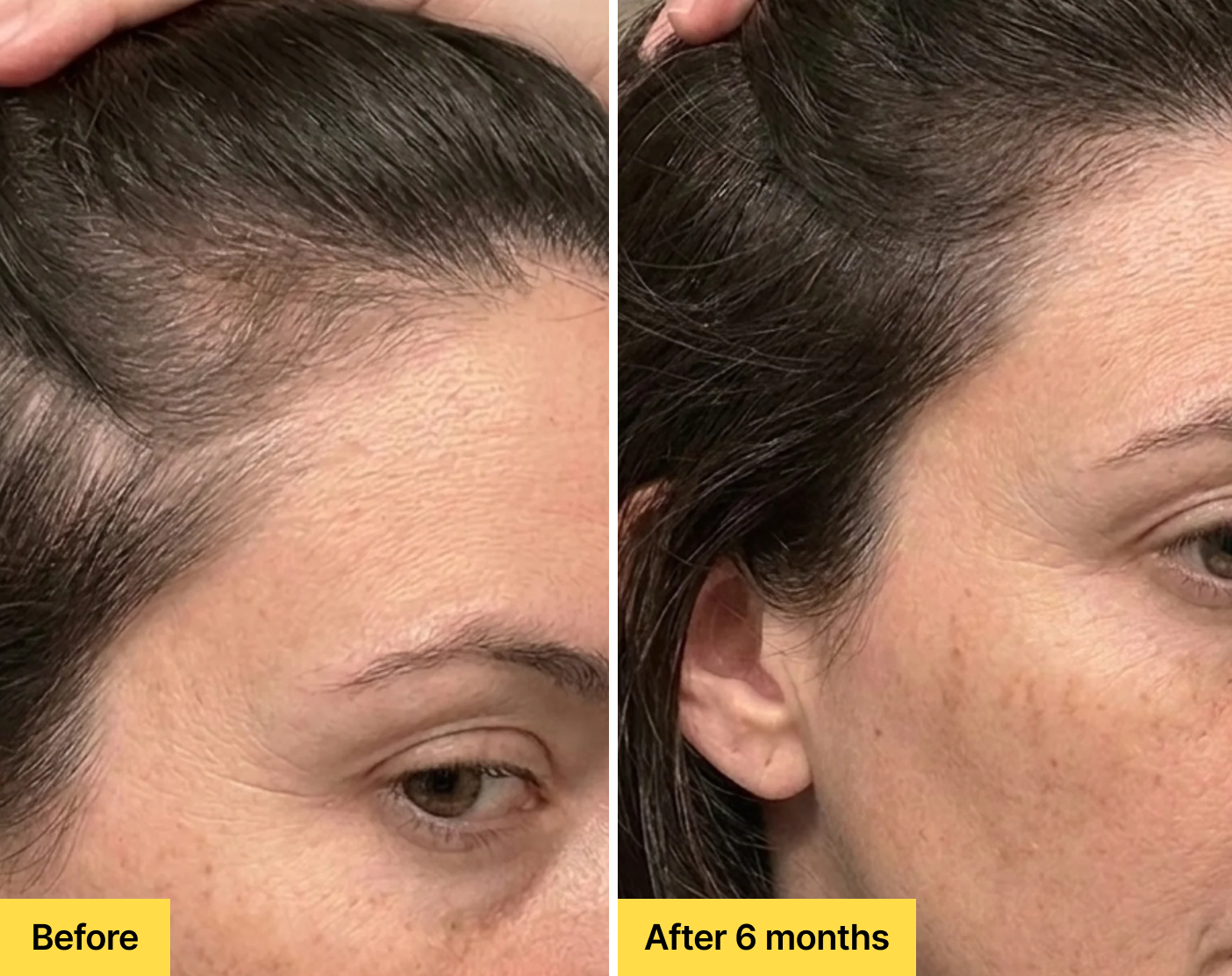
Hair thinning vs hair loss explained clearly: key differences, common causes, reversibility, vitamin deficiencies, and when to see a doctor.
Hair growth after chemo often starts within weeks to months. Learn the typical regrowth timeline, chemo curls, texture changes, and when to ask your care team.