
How DHT Causes Hair Loss: What It Does to Follicles, Who It Affects, and What May Help
What is DHT and how does DHT cause hair loss?
DHT (dihydrotestosterone) is a hormone your body makes from testosterone. DHT causes hair loss by binding to genetically sensitive hair follicles and gradually shrinking them over repeated growth cycles, which leads to thinner, shorter hairs and eventually less visible coverage.
DHT is created when the enzyme 5-alpha-reductase converts testosterone into a more potent androgen. That matters because some follicles, especially on the scalp, are more sensitive to DHT than others. This is why one person may thin mainly at the crown, another at the temples, and another along a widening part.
Hair loss from DHT does not usually happen all at once. It tends to be a slow process called follicle miniaturization. Miniaturization means the follicle still produces hair, but each new strand grows back finer, shorter, and less pigmented than before.
What DHT normally does in the body
DHT is not inherently bad. It is a normal androgen involved in sexual development, body hair patterns, and other hormone-related functions.
The issue is not that DHT exists. The issue is how certain scalp follicles respond to it. In people with androgenetic alopecia (pattern hair loss), susceptible follicles react to DHT in a way that gradually disrupts normal growth.
How DHT changes the hair growth cycle
Anagen is the active growth phase of the hair cycle, while telogen is the resting phase and exogen is the shedding phase. DHT-related hair loss happens because sensitive follicles spend less time in anagen and more time in resting or shedding phases.
Over time, that shift leads to:
- shorter growth cycles
- finer and shorter hairs
- more visible scalp
- slower regrowth after shedding
- reduced density in affected areas
A helpful way to think about it is this: DHT does not usually make all hair fall out at once. It changes the conditions under which the follicle grows, cycle after cycle, until the hair becomes too weak to provide normal coverage.
Why DHT causes hair loss in some people but not others
DHT causes hair loss in some people because follicle sensitivity, not just hormone level, drives the response. Two people can have similar DHT levels, but only the person with genetically sensitive follicles may develop pattern thinning.
This sensitivity is influenced by androgen receptors in the follicle and by inherited patterns of hair loss. That is why family history often matters, though it is not always simple or predictable.
It is also why DHT-driven hair loss needs to be separated from other common causes of shedding. Not every person losing hair has a DHT problem. Telogen effluvium is stress- or illness-related shedding, thyroid disease can alter hair cycling, low iron or other nutrient gaps can increase shedding, and alopecia areata is an autoimmune condition that causes patchy loss.
What causes DHT to increase?
DHT can be influenced by genetics, androgen activity, age-related hormonal shifts, and 5-alpha-reductase enzyme activity. But blood levels alone do not always predict what is happening at the scalp.
Factors that may affect DHT-related patterns include:
- inherited sensitivity to androgens
- local scalp enzyme activity
- hormonal shifts with age
- conditions that alter androgen balance
- sex-specific hormone changes, especially around menopause
In practical terms, people often search for what causes DHT to increase because they assume a lab value explains everything. Sometimes it helps, but scalp-level sensitivity usually matters more than a number on its own.
Does high DHT always mean high testosterone?
High DHT does not always mean high testosterone. Testosterone and DHT are related, but they are not interchangeable.
DHT is made from testosterone, yet the conversion rate can vary by tissue and by enzyme activity. That means someone can have normal testosterone and still have scalp follicles that react strongly to DHT. It also means you should be cautious about assuming hair loss is simply a testosterone problem.
What DHT-related hair loss looks like in men and women
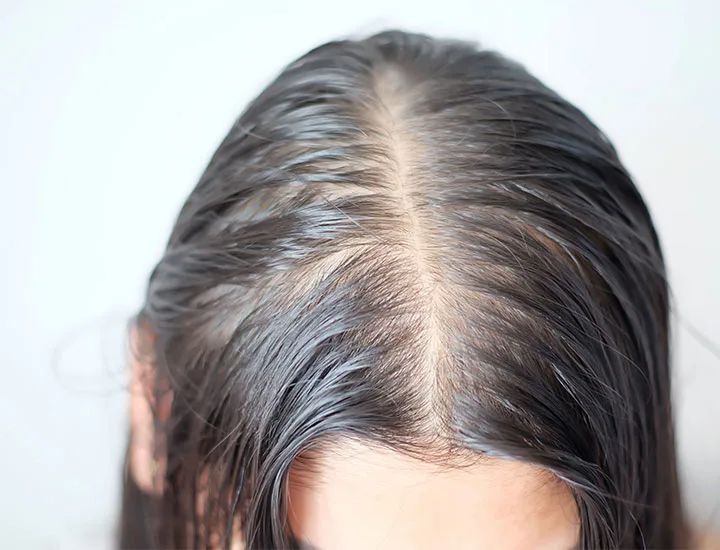
DHT-related hair loss usually follows recognizable patterns, but those patterns differ between men and women. In men, it often shows up as temple recession and crown thinning. In women, it more often appears as diffuse thinning, a wider part, and reduced density through the top of the scalp.
In both cases, the underlying process is usually progressive miniaturization rather than sudden heavy shedding.
DHT hair loss in women
Female pattern hair loss can still be androgen-related even when it does not look like male receding hairlines. Many women notice a widening part, less volume at the crown, more scalp visibility under bright light, or a ponytail that feels thinner over time.
This can become more noticeable during perimenopause and menopause, when hormonal shifts change how follicles behave. A woman does not need obviously "high male hormones" for DHT-related thinning to be part of the picture.
Some people also look for symptoms of high DHT in males or females, such as acne, increased body hair, or prostate-related concerns in men. Those signs may overlap with androgen activity, but they are not enough to diagnose the cause of hair loss by themselves.
Early signs that follicles may be miniaturizing
Early DHT-related thinning often looks subtle before it looks dramatic. The first clue is often texture and density change, not obvious baldness.
Common early signs include:
- a thinner ponytail
- a widening part
- finer regrowth around the hairline
- more scalp visibility at the crown
- hair that will not grow to its previous length
- reduced fullness when styling
If the change was sudden and dramatic, DHT may not be the only explanation. Pattern hair loss usually develops gradually.
Can you block DHT or lower its effects on hair follicles?
Yes, you can try to lower DHT's effects on follicles, but the options vary in strength, evidence, and tradeoffs. Prescription medications have the strongest evidence for DHT-related hair loss, while topical support, lifestyle changes, and supplements may play different supporting roles.
People often search for a dht blocker expecting one simple answer. In reality, treatment depends on sex, stage of thinning, tolerance for side effects, and whether DHT is the main driver.
Prescription and over-the-counter options
Finasteride and dutasteride are prescription medications that reduce conversion of testosterone to DHT. Minoxidil works differently. It is not a DHT blocker. It is a hair growth treatment that helps support follicles and extend growth activity.
Here is the high-level difference:
| Option | Main mechanism | Best fit | Limits to know |
|---|---|---|---|
| Finasteride | Lowers DHT by inhibiting 5-alpha-reductase | Common first-line option for male pattern hair loss | Not appropriate for everyone, especially in pregnancy-related contexts |
| Dutasteride | More potent DHT suppression | Sometimes used when finasteride is not enough | Prescription-only and not first choice for all patients |
| Minoxidil | Supports growth activity and prolongs anagen | Men and women with early to moderate thinning | Requires consistent use and does not directly block DHT |
Results from these treatments are usually measured in months, not days. With consistent use, many people assess progress around 3 to 6 months, and fuller evaluation often takes longer.
Natural approaches and DHT blocker foods
People use the term dht blocker food to describe foods or botanicals thought to influence androgen activity. This may include ingredients like saw palmetto, pumpkin seed oil, or foods associated with broader hormonal health.
The problem is not that these ideas are meaningless. It is that the evidence is usually less robust than it is for prescription options. Foods and botanicals may support overall hair health or hormonal balance, but they are not equivalent to proven drug therapies for androgenetic alopecia. Why most hair vitamins fail to deliver results often comes down to this same issue — relying on underdosed or poorly evidenced ingredients that cannot match the bar set by pharmaceutical interventions.
Where a multi-cause supplement may fit
Some readers want support that goes beyond DHT alone. That is where a multi-pathway supplement may fit, especially if thinning seems linked to more than one issue.
The Root Co. Hair Growth Vitamins are positioned for this kind of situation. Rather than focusing only on DHT, the formula is built around four pathways: DHT activity, nutritional gaps, scalp inflammation, and stress-related damage. The formula is covered by US Patent #11,160,750, and the brand cites an independent clinical reference presented to the International Society of Hair Restoration Surgeons reporting outcomes such as 93% reduced shedding within 60 days.
That does not make it equivalent to finasteride or dutasteride. It means it may be worth considering if your thinning seems multifactorial, you want an oral supplement rather than a topical, and you prefer a non-biotine, non-keratin formula. The standard routine is 2 capsules daily, one with breakfast and one with dinner, as part of The Root Co. Hair Vitamin regimen. Consider something else first if you need a prescription-strength DHT-lowering approach or if your hair loss is sudden, patchy, or clearly medical in origin.
What DHT-related hair loss can and cannot improve
DHT-related hair loss may improve if you catch miniaturization early to moderately early, while follicles are still active. It is much harder to improve areas that have been inactive, severely miniaturized, or scarred for years.
That ceiling matters. No supplement, topical, or medication can honestly promise to restore every long-bald area. The goal is usually to slow progression, reduce shedding, support thicker regrowth where follicles remain active, and preserve coverage.
How long does it take to see results?
Hair regrowth timelines are measured in months because follicles grow on a biological cycle. If an approach is working, reduced shedding often comes first, followed by finer regrowth becoming thicker and more visible density later.
A realistic timeline looks like this:
| Timeline | What people may notice first |
|---|---|
| 1 to 2 months | Less shedding in the shower, brush, or on clothes |
| 3 to 4 months | Short regrowth, baby hairs, some improved fullness |
| 6 months or longer | Better density, thicker-feeling hair, more visible change in photos |
The exact timing depends on the intervention, how advanced the thinning is, and whether DHT is the main driver.
When DHT may not be the main problem
DHT is not the best explanation for every form of hair loss. Sudden postpartum shedding, post-illness loss, medication-related shedding, traction from tight styling, and inflammatory scalp disease may need a different framework.
It is worth getting medical evaluation if you have:
- sudden or heavy shedding
- patchy bald spots
- scalp pain, redness, scale, or burning
- signs of thyroid, autoimmune, or endocrine issues
- rapid change after childbirth, illness, surgery, or a medication shift
If you are pregnant, nursing, taking prescription medication, or experiencing sudden or significant hair loss, consult your healthcare provider before adding a new supplement to your routine. Sudden hair loss can sometimes be a sign of an underlying condition worth investigating.
These statements have not been evaluated by the Food and Drug Administration. This product is not intended to diagnose, treat, cure, or prevent any disease.
FAQ
How exactly does DHT cause hair loss?
DHT causes hair loss by binding to genetically sensitive follicles and driving miniaturization over time. That shortens the growth phase, increases time spent resting or shedding, and produces thinner, shorter hairs with each cycle.
Can women get DHT-related hair loss too?
Yes. Women can develop DHT-related thinning, usually as female pattern hair loss. It often shows up as diffuse thinning, reduced density through the top of the scalp, and a widening part rather than obvious temple recession.
What causes DHT to increase in the first place?
DHT can be influenced by genetics, androgen activity, age-related hormone shifts, and how active the 5-alpha-reductase enzyme is in certain tissues. But scalp sensitivity often matters more than the absolute hormone level.
Does high DHT always mean high testosterone?
No. DHT is made from testosterone, but the two are not the same thing. A person can have normal testosterone and still have scalp follicles that are highly sensitive to DHT.
What is the best DHT blocker for hair loss?
There is no single best option for everyone. Prescription treatments like finasteride and dutasteride have the strongest evidence for directly lowering DHT, while minoxidil supports growth through a different pathway. Supplements and botanicals may fit some people, but they are generally not equivalent to prescription drugs.
Can DHT hair loss be reversed if you catch it early?
Early to moderate miniaturization may improve if the follicle is still active. The earlier you address pattern thinning, the better the chance of preserving or improving density. Areas that have been completely inactive or scarred for years have a much lower ceiling for regrowth.
Read more
A clear guide to hair growth supplement clinical evidence, what strong studies look like, which ingredients matter, and where claims often fall short.
Is your shedding normal? Explore the 4 hair growth cycle phases, how long each lasts and the signs your hair loss needs a closer look.