
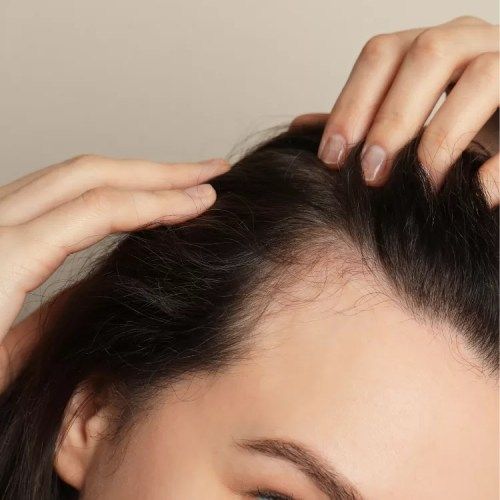
When Does Hair Growth After Chemo Start? Timeline & Regrowth Stages
Hair growth after chemo often starts within a few weeks to a few months after chemotherapy ends. Many people notice soft fuzz first, then short visible strands, but the timeline depends on the drugs used, total dose, and how quickly the follicles recover.
Chemotherapy affects hair because it targets rapidly dividing cells. Cancer cells divide quickly, but so do cells in anagen (the active growth phase of the hair cycle). When those hair-matrix cells are disrupted, strands can loosen and shed. That is why scalp hair may thin or fall out during treatment.
It is also worth separating chemotherapy from other cancer treatments. Not every treatment causes complete hair loss, and regrowth patterns differ:
- Chemotherapy often causes diffuse scalp hair loss and can also affect brows, lashes, and body hair.
- Targeted therapy may cause thinning, texture change, or slower growth rather than complete loss.
- Radiation therapy usually affects hair only in the treated area.
- Hormone therapy may contribute to thinning, but the pattern is often slower and different from classic chemo-related hair loss.
For a broad medical overview of treatment-related hair loss, the American Cancer Society guide to hair loss is a useful reference.
Why chemo causes hair loss in the first place
Chemo causes hair loss because it interrupts fast-growing follicles while they are actively producing hair. Since many scalp hairs are in anagen at any given time, the effect can be sudden and visible.
This is also why the loss is not always limited to scalp hair. Eyebrows, eyelashes, facial hair, and body hair can be affected too. The exact pattern depends on the treatment plan, but the underlying issue is the same: the follicle pauses production while the body prioritizes recovery.
What influences your regrowth timeline
Your regrowth timeline depends on more than one factor. Treatment type matters most, but your baseline hair density, stress load, nutrition status, and whether treatment is fully finished can all play a role.
Common factors include:
- Chemotherapy regimen
- Dose intensity
- Length of treatment
- Age
- Baseline hair thickness and density
- Protein and iron status
- Vitamin D or other nutritional gaps
- Stress and sleep disruption
- Whether chemotherapy is complete or ongoing
If active treatment is still continuing, regrowth may be delayed. Hair usually recovers more predictably once the follicle is no longer being exposed to the same treatment stress.
What are the stages of hair growth after chemo?
Hair growth after chemo usually follows a slow, uneven, month-by-month pattern rather than a straight line. Early regrowth often looks patchy or fuzzy before it starts to resemble fuller coverage.
A lot of people search for "pictures of hair growth after chemo" because they want to know if what they are seeing is normal. The more useful frame is not perfect symmetry. It is steady change over months.
| Time after chemo | What regrowth often looks like | What is usually normal |
|---|---|---|
| 0 to 3 months | Soft fuzz, patchy return, uneven scalp coverage, slow brows or lashes | Hair may be sparse, fine, or hard to style |
| 3 to 6 months | Short visible hair, more coverage, early texture changes | Color and curl pattern may still look different |
| 6 to 12 months | Thicker-looking growth, better coverage, more styling options | Density may still lag behind length |
| 1 year post chemo | Firmer sense of long-term texture and density pattern | Some people still see slower recovery or persistent texture shifts |
The first 3 months after chemo
The first 3 months after chemo are usually the hardest emotionally because progress is real but often subtle. Many people notice scalp sensitivity easing first, followed by fine peach-fuzz regrowth.
Common early signs include:
- Soft fuzz across the scalp
- Patchy or uneven density
- Slower regrowth at the crown
- Brows and lashes returning on their own timeline
- Hair that looks too fine to count as "real" yet
This stage can feel slow because visible coverage lags behind actual follicle activity. A mirror may not show much week to week, even when growth has started.
3 to 6 months: when hair becomes more visible
Between 3 and 6 months, hair often becomes visible enough to feel like real coverage rather than fuzz. For many people, this is the stage when they can begin short styling, even if the texture still feels unfamiliar.
You may notice:
- Better scalp coverage
- Less transparency along the top
- More defined brows or lashes
- Hair that feels curlier, straighter, coarser, or finer than before
This is often when people start recognizing the phrase "chemo curls" in their own regrowth.
6 to 12 months and 1 year post chemo hair growth
By 6 to 12 months, many people have fuller regrowth, but 1 year post chemo hair growth can still look different from pre-treatment hair. Length often returns before density feels fully restored.
At around the 1-year mark, common patterns include:
- Enough length for more styling flexibility
- Better overall coverage
- Texture starting to settle
- Ongoing thinner areas at the crown or temples for some people
- Persistent color or curl-pattern changes in others
The AAD hair loss overview can help if you are trying to understand whether slower regrowth might overlap with another form of thinning.
Why does hair look different after chemo?
Hair often looks different after chemo because recovering follicles do not always produce the same strand right away. Early regrowth may come back finer, curlier, straighter, darker, lighter, or more fragile.
That does not necessarily mean something is wrong. It often means the follicle is still stabilizing through its first few growth cycles.
Chemo curls, color changes, and uneven texture
Chemo curls, temporary color shifts, and uneven texture are common. New hair can be unpredictable at first, especially in the earliest growth cycles after treatment.
You might see:
- Curlier hair than before
- Straighter regrowth if your hair was previously textured
- Darker or lighter strands
- Coarser texture
- Finer, softer hair
- Uneven growth patterns across the scalp
Some of these changes soften over time. Some do not fully return to the exact pre-chemo pattern. The important thing is that change alone is not automatically a red flag.
When hair changes may be worth asking about
Very delayed regrowth, focal bald patches, scalp irritation, or signs of scarring are worth a follow-up conversation. Those patterns can point to something beyond ordinary post-chemo recovery.
Ask your oncology or dermatology team about new concerns if you notice:
- Little to no visible regrowth months after treatment ends
- Persistent scalp pain, rash, or burning
- Clearly patchy bald spots rather than diffuse slow regrowth
- Areas that look shiny or scarred
- Ongoing thinning that seems to worsen instead of improve
What helps hair growth after chemo, and what should you avoid?
What helps hair growth after chemo most is usually basic recovery care, not miracle products. Gentle scalp care, adequate protein, enough rest, and checking for correctable nutrient issues matter more than aggressive routines.
It also helps to avoid doing too much too soon. Fresh regrowth is often fragile.
The basics that support healthier regrowth
The basics that support healthier regrowth are simple. Most of it comes down to protecting the fragile new hair and giving it the nutrition and time it needs to settle.
Useful habits include:
- Washing gently with a mild shampoo
- Using a soft brush or wide-tooth comb
- Avoiding high heat early on
- Delaying harsh chemical processing like bleach or relaxers until hair feels stronger
- Protecting the scalp from sun exposure
- Eating enough protein, since hair is built from protein
- Asking your clinician whether iron, vitamin D, or other labs make sense if recovery seems slow
Scalp massage, oils, and rich serums may feel soothing, but they are not a guaranteed shortcut. They can be supportive if they are gentle and non-irritating. They are not a substitute for time or medical follow-up when something seems off.
Can supplements help hair growth after chemo?
A supplement may support hair health after chemo if nutritional gaps, stress, or inflammation are part of the picture, but it is not a treatment for cancer-related hair loss. That distinction matters.
This is where restraint is important. Biotin is the default hair supplement many people reach for, but biotin alone does not address every reason hair may be slow to recover. In some cases, a clinician may also discuss minoxidil, a common hair-growth medication, as part of a broader recovery plan. That decision should be individualized.
Supplements can make the most sense when:
- Appetite was poor during treatment
- Protein intake has been low
- Stress and sleep disruption are ongoing
- Bloodwork suggests a nutritional gap
- Regrowth has started, but hair still seems fragile or sheds more than expected
If you want a general overview of how minoxidil is used for hair loss, the Mayo Clinic minoxidil monograph is a reasonable place to start before asking your care team about it.
Realistic expectations: what hair growth after chemo can and cannot do
Hair usually comes back after chemo, but the speed, density, and final texture are not fully controllable. No supplement, serum, or scalp routine can guarantee your exact pre-chemo hair by a specific date.
That is not meant to discourage anyone. Hair regrowth runs on a biological timeline, and comparing yours to someone else's tends to make it feel slower than it really is.
How to know if progress is normal
Progress is easier to judge month to month than day to day. The most useful markers are steady coverage, improved texture resilience, and visible change in photos taken under the same lighting.
Try these practical markers:
- Take one photo each month from the front, top, and side
- Watch for gradual scalp coverage rather than immediate length
- Notice whether brows or lashes are returning too
- Avoid relying too heavily on pictures of hair growth after chemo from other people
Someone else's timeline is not a reliable benchmark for your follicles.
When to talk to your care team
Talk to your care team if regrowth seems very delayed, the scalp is irritated, or a different hair-loss pattern seems to be developing. That is especially important if you want to ask about minoxidil, supplements, or possible nutrient testing.
Check in if you have:
- No visible regrowth several months after treatment ends
- New or sudden shedding after regrowth had started
- Scalp pain, rash, or marked irritation
- Patchy loss instead of diffuse recovery
- Questions about thyroid, iron, or hormone issues
- Concerns about supplement use alongside current medications
If you are pregnant, nursing, taking prescription medication, or experiencing sudden or significant hair loss, consult your healthcare provider before adding a new supplement to your routine. Sudden hair loss can sometimes be a sign of an underlying condition worth investigating.
These statements have not been evaluated by the Food and Drug Administration. This product is not intended to diagnose, treat, cure, or prevent any disease.
What about hair thinning that is not treatment-related?
Chemo-related hair loss follows its own recovery timeline, and no supplement speeds that up or takes the place of your care team's guidance. It helps to set that apart from a separate and very common situation: everyday thinning with no treatment behind it, the kind driven by nutritional gaps, hormones, stress, or genetics. That is what an oral hair supplement is actually built for.
If your thinning fits that second picture rather than active or recent cancer treatment, a multi-cause formula may be worth a look.
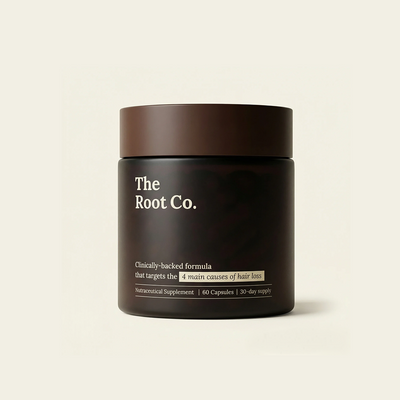
The Root Co. Breakthrough Hair Vitamin
$49.90 a month on the 30-day plan, or about $33.30 a month on the 90-day plan, taken as two capsules daily with a 90-day money-back guarantee.
It is a biotin-free oral formula built around four common drivers of everyday hair loss: DHT activity, nutritional gaps, scalp inflammation, and stress. The blend pairs plant extracts (açaí berry, green coffee bean, olive leaf, pau d'arco) with zinc, magnesium, vitamin D3, and vitamin B5, in vegetarian capsules made in a GMP-certified US facility. It holds an issued US patent and an independent clinical reference presented to the International Society of Hair Restoration Surgeons, and the 90-day guarantee means there is little cost to seeing whether it helps.
See The Root Co. Hair Growth VitaminsIf your hair loss is connected to cancer treatment, this is not the answer. Very delayed regrowth, patchy loss, or changing scalp symptoms are a reason to check in with your oncology or dermatology team, not to reach for a supplement.
Frequently asked questions
How long does hair growth after chemo take?
Hair growth after chemo often begins within weeks to a few months after treatment ends, but fuller recovery usually takes several months. Many people see early fuzz first, more visible growth by 3 to 6 months, and a clearer picture of density and texture by 6 to 12 months.
What helps hair growth after chemo the most?
Gentle scalp care, enough protein, rest, stress recovery, and checking for correctable nutritional issues help most. Products can support the process, but they do not replace time or medical follow-up when regrowth is delayed.
Why is my hair curly or a different color after chemo?
Recovering follicles often produce hair with a temporarily different texture or pigment. That is why chemo curls, finer texture, coarser strands, or darker or lighter regrowth can happen in the first several growth cycles.
What should I expect at 1 year post chemo hair growth?
At 1 year post chemo hair growth, many people have fuller coverage and more styling flexibility, but texture and density may still be settling. Some hair returns close to its old pattern. Some remains curlier, finer, or otherwise different.
When should I worry if my hair is not growing back after chemotherapy?
It is worth asking your care team if there is little or no visible regrowth months after treatment ends, if you have patchy bald areas, or if the scalp is painful or inflamed. Ongoing thinning can sometimes overlap with other issues such as iron deficiency, thyroid changes, or another form of hair loss.
Read more
Learn what hair vitamins for thin hair can actually do, which nutrients matter, realistic timelines for results, and how to choose a formula without falling for hype.
Learn what slows hair growth in women, which treatments may help, and what results to expect from supplements, topicals, nutrition and medical options.