
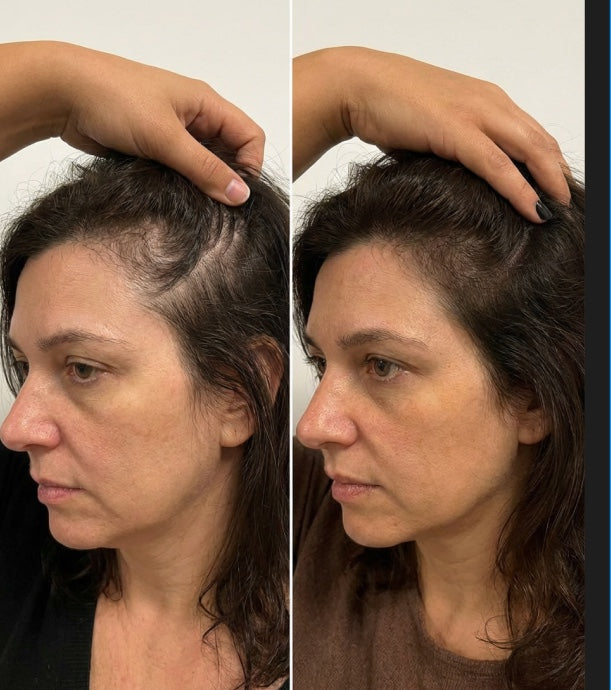
Hair Growth for Women: What Actually Helps, What Slows It Down, and What to Expect
Hair growth for women is slower, more complex, and more cause-dependent than most beauty content admits. If you are noticing more scalp visibility, a thinner ponytail, or extra hair in the drain, the most useful next step is not chasing a miracle product. It is understanding what is affecting your growth cycle, what can realistically help, and what kind of timeline makes sense.
What is hair growth, and what is normal for women?
Hair growth is the process of a living hair follicle producing a strand over time. In practice, women often lump four different things together: actual new growth, reduced shedding, less breakage, and true regrowth in areas that have thinned. They are related, but they are not the same.
That distinction matters because many women think nothing is working when the first positive sign is actually less fallout during washing or brushing. That is often progress, even before the mirror shows it clearly.
Hair growth also happens in a cycle, not in a straight line. The four main phases are:
- Anagen: the active growth phase, when the follicle produces hair
- Catagen: the short transition phase
- Telogen: the resting phase
- Exogen: the shedding phase, when a hair releases
A healthy scalp has follicles in different phases at the same time. That is why some shedding is normal. Concern usually starts when shedding stays elevated for weeks, the part looks wider, the scalp shows through more, or the ponytail feels noticeably smaller.
How fast does hair grow on average?
Scalp hair usually grows gradually, not dramatically. A commonly cited average is about half an inch per month, although genetics, age, hormones, nutrition, stress, and overall health can shift that up or down.
What matters more than the exact number is the pace. Hair growth is measured in months. A routine can improve the conditions for growth, but it cannot force visible density changes in a few days. If a product promises major regrowth in a week, that promise is not aligned with hair biology.
Hair growth vs. hair retention: why the difference matters
Hair retention means keeping the hair you already have from shedding prematurely or breaking off. For many women, that is the first real win.
If your shower drain looks less dramatic, your brush collects fewer strands, and your clothes are not covered in fallout, that does not mean you imagined the problem. It often means the growth cycle is stabilizing. New hairs still take time to become visible enough to change how your hair looks overall.
Why hair growth slows down or stalls in women
Hair growth slows when the follicle environment changes. The most common reasons are hormonal shifts, stress, nutritional gaps, aging, genetics, illness, and medication changes. In many women, more than one of those is happening at the same time.
This is also where it helps to separate two patterns:
- Temporary shedding: more hairs shift into shedding after a trigger, but the follicles are still capable of producing hair
- Miniaturization: the follicle gradually shrinks over repeated cycles, producing finer, shorter hairs over time
Temporary shedding can feel dramatic but may recover. Miniaturization is slower and easier to miss early on, especially in women with diffuse thinning rather than a receding hairline.
Postpartum, perimenopause, and menopause hair growth changes
Hormonal transitions are one of the most common reasons women notice a sudden change in hair. Postpartum shedding often begins around two to three months after giving birth, when hormone levels shift and more hairs enter the shedding phase together.
Perimenopause and menopause can be less sudden but more persistent. Estrogen declines, androgen balance changes, and hair may spend less time in the growth phase. The result can look like:
- a widening part
- less volume on top
- finer strands
- a ponytail that feels smaller over time
These changes are common, but common does not mean imaginary or untreatable. It means the cause is often hormonal and gradual rather than a simple dryness issue.
Stress-related shedding and telogen effluvium
Telogen effluvium is a form of diffuse shedding that happens when a stressor pushes more hairs than usual into the resting and shedding phases. The stressor can be emotional, physical, or medical.
Common triggers include:
- illness with fever
- surgery
- postpartum recovery
- rapid weight loss
- intense psychological stress
- medication changes
The confusing part is the delay. Shedding often starts two to three months after the triggering event. The AAD guidance on excessive shedding explains this lag clearly, which is why many women feel blindsided. They look at what happened last week, when the real trigger may have happened a season ago.
Pattern thinning in women and DHT-related follicle miniaturization
DHT (dihydrotestosterone) is a hormone derived from testosterone that can bind to follicle receptors and contribute to miniaturization in genetically susceptible follicles. In women, this usually does not look like a classic male recession pattern. It more often appears as diffuse thinning across the top, increased scalp visibility, or a wider center part.
Miniaturization is gradual. Each cycle produces a slightly finer, shorter strand until density drops enough to become visible. That is why many women say, "I did not notice hair falling out, it just looked thinner over time."
What actually supports hair growth faster, and what mostly helps with hair appearance
You cannot speed up true hair growth beyond biology in any dramatic way. What you can do is support follicle function, reduce unnecessary shedding, and protect the hair fiber so the length you grow does not snap off.
That means separating evidence-backed support from advice that is mostly cosmetic.
Can you grow hair faster naturally in a week?
No, not in the way most people mean it. You cannot create a visible one-week regrowth transformation because follicles do not work on a seven-day timeline.
What one week can do is start reducing things that make your hair look worse than it is:
- less heat damage
- less tight styling
- more protein and iron awareness
- gentler detangling
- better scalp care
- less breakage
So the honest answer is this: you cannot make hair grow meaningfully faster in a week, but you can stop undermining the hair you are trying to keep.
Diet, protein, iron, vitamin D, and other hair-relevant nutrients
Hair is not an essential tissue, so the body does not prioritize it during times of low intake or deficiency. If growth has slowed because of a nutritional gap, fixing that gap matters.
The most hair-relevant foundations for women include:
- Protein: hair is built largely from protein, so consistently low intake can affect growth quality
- Iron and ferritin: low iron stores are a common contributor to shedding in women
- Vitamin D: low levels are often investigated in hair thinning workups
- Zinc: important for normal follicle function
- B vitamins: involved in energy metabolism and cellular turnover
- Magnesium: relevant to overall metabolic function and stress regulation
Not every woman with thinning has a deficiency, and not every supplement helps if the issue is not nutritional. But when low intake, restrictive dieting, heavy periods, postpartum depletion, or poor absorption are part of the picture, nutrition stops being a side note.
Scalp care, heat styling, tension, and breakage prevention
Scalp care and gentle styling mostly help with retention, not dramatic regrowth. That does not make them trivial. If your ends are breaking, your hair can seem "stuck" even when it is technically growing.
Helpful habits include:
- lowering heat frequency and temperature
- reducing bleach or overprocessing where possible
- avoiding tight ponytails, braids, or extensions that create traction
- detangling gently, especially when wet
- treating scalp irritation if present
- using oils or conditioners to reduce shaft dryness and friction
A comfortable, low-irritation scalp is a better environment for healthy hair cycling. But it is important to stay realistic: improved scalp comfort and less breakage do not automatically solve hormonal or deficiency-related thinning.
Do hair growth products work? A practical guide for women
Some hair growth products work well for the right cause. Others mainly improve feel, shine, or breakage. The key is matching the category to the problem instead of expecting every product to solve every type of thinning.
Hair growth oil: what it may help with and where it has limits
Hair growth oil may help with scalp dryness, hair shaft lubrication, and breakage reduction. Some women also find oils useful for massage and scalp comfort.
Its limits are just as important:
- oils do not usually correct iron deficiency
- oils do not meaningfully address DHT-related miniaturization on their own
- oils do not reverse postpartum or stress shedding by themselves
- oils can improve the feel of hair without changing density
That does not make them useless. It makes them supportive rather than complete. If your main problem is dryness and breakage, oil may help. If your main problem is a widening part and diffuse thinning, it is rarely enough alone.
Topicals, supplements, and prescription treatments compared
These categories do different jobs. Treating them as interchangeable is one reason women get frustrated.
| Product type | What it may help with | Where it has limits |
|---|---|---|
| Topicals such as minoxidil | Can help stimulate growth and support density in some women, especially in pattern thinning | Requires consistency, can irritate some scalps, and does not address nutritional gaps directly |
| Oral supplements | May support hair health when thinning involves nutrition, stress, inflammation, or multi-factor patterns | Results take months and depend on the cause; not a substitute for diagnosis |
| Prescription DHT-focused options | May be stronger for androgen-driven pattern loss in selected patients | Need medical oversight and are not right for every woman |
| PRP | Can be considered for some thinning patterns in clinic settings | Expensive, procedure-based, and response varies |
| Low-level laser therapy | Non-drug option some women use to support density | Requires ongoing use and tends to be gradual rather than dramatic |
Topicals may make the most sense when the main goal is local stimulation. Supplements may make more sense when shedding appears tied to stress, nutrition, postpartum recovery, or a broader pattern. Prescriptions may matter more when DHT-related pattern loss is advanced or persistent. Our explainer on how DHT drives female pattern thinning is useful background here because it shows why cause matters more than category loyalty.
When combination approaches make more sense than one product alone
Many women do not have a single-cause hair issue. They have some combination of stress, hormonal change, low ferritin, inflammation, aging, and genetic susceptibility.
That is why layered plans often make more sense than product-hopping. A thoughtful plan might include:
- correcting an iron or vitamin D deficiency if present
- reducing breakage and traction
- using a topical when local stimulation is appropriate
- adding systemic support when the issue is diffuse or multi-factor
- getting medical guidance if the pattern suggests a hormonal or scalp disorder
One product can help. It just may not need to do every job by itself.
What to expect from a hair growth plan: realistic timelines and limitations
A realistic hair growth plan usually shows early signs in one to two months and more visible cosmetic change across three to nine months. If your expectations are shorter than that, the routine may seem like it is failing when it is simply still early.
Early signs your hair growth routine may be working
The first signs are often subtle but meaningful. Many women notice:
- less hair in the drain
- less fallout on wash day
- fewer strands on clothes or pillows
- short new hairs along the hairline or part
- a part that stops getting wider
- a ponytail that feels less diminished over time
This "shedding slows first" pattern is common because follicles need time to produce strands long enough to change visible density.
| Timeline | What women often notice first | What it usually means |
|---|---|---|
| Weeks 4 to 8 | Reduced shedding, less wash-day fallout | The cycle may be stabilizing before visible density changes appear |
| Months 2 to 3 | Short new hairs near the part or hairline | Active follicles may be re-entering a productive growth phase |
| Months 3 to 4 | Hair feels fuller, scalp shows less in certain lighting | New growth is becoming cosmetically noticeable |
| Months 6 to 9 | Better density, thicker ponytail, improved coverage | Longer-term consistency is paying off |
What an oral supplement or topical cannot do
An oral supplement or topical cannot restore follicles that have been permanently inactive for years, and it cannot replace medical evaluation for sudden, patchy, painful, or severe hair loss.
That ceiling matters. Supportive products work best when follicles are still active but underperforming. If an area has been completely smooth or bald for a long time, the answer may involve a dermatologist, a scalp diagnosis, or a hair restoration specialist rather than another over-the-counter bottle.
Consistency also matters more than switching products every few weeks. Hair responds to stable input. Product-hopping usually restarts the patience clock.
When a multi-cause approach to hair growth makes sense
A multi-cause approach makes sense when your thinning does not clearly trace to one single issue. That is common in women. Hair may be affected by hormones, stress, nutrition, inflammation, and genetics all at once.
This is also why one-ingredient formulas often disappoint. Biotin alone helps a narrow problem. It does not meaningfully cover DHT-related changes, stress-triggered shedding, or broader nutritional patterns by itself.
A useful framework is to think in four buckets:
- DHT-related follicle stress
- Nutritional gaps
- Scalp inflammation
- Stress pathways that affect the hair cycle
That framework does not replace diagnosis. It simply explains why "I tried one thing and it did nothing" is such a common story.
Who may benefit most from a systemic hair growth supplement
A systemic supplement may fit best for women who have:
- early to moderate thinning rather than long-bald areas
- postpartum or hormonal shedding
- stress-related diffuse shedding
- a widening part with no obvious single trigger
- a preference for a non-topical routine
- frustration with biotin-only or keratin-only products
It may fit less well for women with patchy loss, inflamed scalp disease, abrupt medication-related shedding, or advanced pattern loss that likely needs prescription or procedural support too.
How The Root Co. fits into a women’s hair growth routine
The Root Co. Hair Growth Vitamins are positioned as a multi-mechanism oral supplement for adults dealing with thinning, shedding, or early hair loss. The formula is built to support four pathways involved in healthy hair: DHT and hormonal balance, nutrient status, scalp inflammation, and the stress response.
The product facts are straightforward:
- 60 capsules per bottle
- 30-day supply
- 2 capsules daily: 1 in the morning with breakfast and 1 in the evening with dinner
- vegetarian capsule shell
- made in the USA in a GMP-certified, FDA-registered facility
- free of biotin, keratin, gluten, added sugar, dairy, soy, egg, gelatin, shellfish, and fish
Its confirmed actives include Açai Berry Extract 5:1, Green Coffee Bean Extract, Olive Leaf Extract, Pau D'Arco Extract 4:1, Zinc Picolinate, Magnesium Citrate, Vitamin D3, and Vitamin B5.
The Root Co. also cites US Patent #11,160,750 and a clinical reference presented to the International Society of Hair Restoration Surgeons. In the brand's reported outcomes, 93% saw reduced shedding within 60 days, 88% saw visible regrowth by month 3, and hair count improved further over months 4 to 9. That is worth noting, but the honest qualifier is that the evidence base is newer and smaller than more established brands such as Nutrafol or Viviscal.
If you want the brand's product details in one place, see The Root Co. Hair Growth Vitamins.
Consider it if this sounds like you, consider something else if it does not
Consider The Root Co. if you want a capsule-format supplement that targets multiple mechanisms at once, you have early to moderate thinning, and you are willing to give a plan three to six months.
Consider another path first if:
- your hair loss is sudden or patchy
- your scalp hurts, burns, or scales
- you suspect a medication change triggered it
- you have advanced pattern loss with long-standing empty areas
- you may need bloodwork, minoxidil, or prescription treatment rather than a supplement alone
The brand's 90-day money-back guarantee is relevant here because it reduces the risk of trying a systemic option in a category where many women have already spent money on things that did not help.
When should women see a doctor about hair growth concerns?
Women should seek medical evaluation when hair loss is sudden, patchy, painful, severe, or tied to a medication change or broader health symptoms. That does not mean the cause is necessarily serious. It means the cause matters.
A basic workup may include review of:
- iron and ferritin
- vitamin D
- thyroid markers such as TSH
- B12 where relevant
- menstrual or androgen-related history
- recent illness, surgery, diet changes, or new medications
Our guide on telling hair thinning from hair loss can help frame that conversation before an appointment.
Hair growth concerns that are usually okay to monitor first
Mild gradual thinning without red-flag symptoms is often reasonable to monitor for a short period while improving nutrition, reducing breakage, and tracking shedding.
Examples that may be okay to watch briefly:
- a slowly widening part over months
- diffuse shedding after a known stressful period
- postpartum shedding in the expected timeframe
- more breakage from heat or chemical processing
Even then, if it continues past a few months, worsens quickly, or comes with fatigue, cycle changes, acne, excess facial hair, itching, or scalp pain, it is worth getting checked.
Questions to ask before starting any new hair growth product
Before starting a product, ask:
- Am I pregnant or nursing?
- Am I taking prescription medication?
- Did my shedding begin after a medication, illness, or major life event?
- Is this likely breakage, shedding, miniaturization, or a mix?
- Does this product match the likely cause?
- Do I need bloodwork before I spend more money?
If you are pregnant, nursing, taking prescription medication, or experiencing sudden or significant hair loss, consult your healthcare provider before adding a new supplement to your routine. Sudden hair loss can sometimes be a sign of an underlying condition worth investigating.
These statements have not been evaluated by the Food and Drug Administration. This product is not intended to diagnose, treat, cure, or prevent any disease.

The internal layer for hormonal, postpartum, and stress-related thinning
Pair it with a topical, or use it on its own. Biotin-free, two capsules a day.
Shop NowFAQ
How can women support hair growth naturally?
Women can support hair growth naturally by protecting the growth cycle and reducing avoidable loss. That usually means eating enough protein, correcting iron or vitamin D deficiency if present, reducing traction and heat damage, managing stress where possible, and keeping the scalp comfortable rather than inflamed. Natural support helps most when it matches the cause.
Can hair growth products really work for thinning hair?
Yes, some hair growth products can help thinning hair, but they are not interchangeable. Oils mainly help dryness and breakage. Topicals may help local stimulation. Supplements may help when thinning involves nutrition, stress, inflammation, or a broader multi-factor pattern. Prescription options may be stronger for certain androgen-driven cases. The better question is not "do products work" but "which type fits my cause."
How long does it take to see hair growth results?
Most women need to think in months, not days. Reduced shedding may show up in about 4 to 8 weeks. Short new hairs may appear around months 2 to 3. More visible fullness often takes 3 to 4 months, and meaningful density changes may take 6 to 9 months. If nothing is changing by that point, it is reasonable to reassess the cause and the plan.
Read more
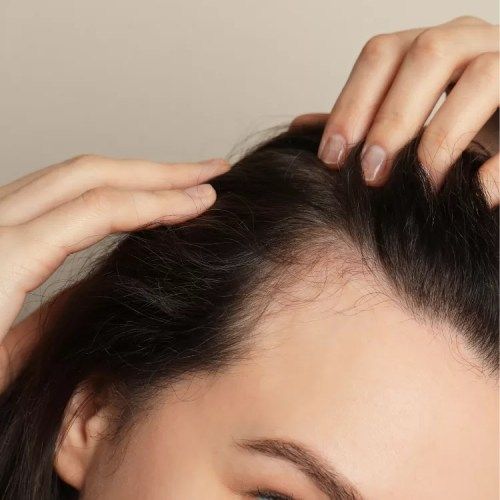
Hair growth after chemo often starts within weeks to months. Learn the typical regrowth timeline, chemo curls, texture changes, and when to ask your care team.
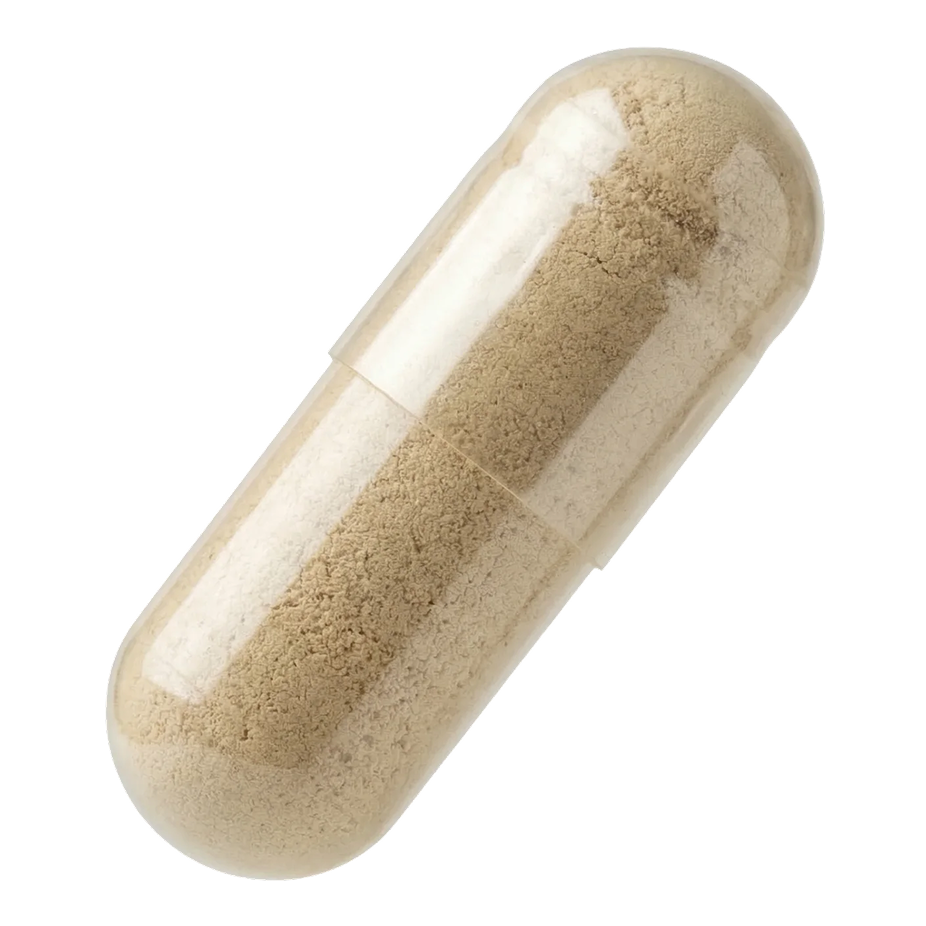
GLP1 hair loss is usually temporary shedding tied to rapid weight loss, stress, and low intake. Learn causes, timeline, and how to support regrowth.