
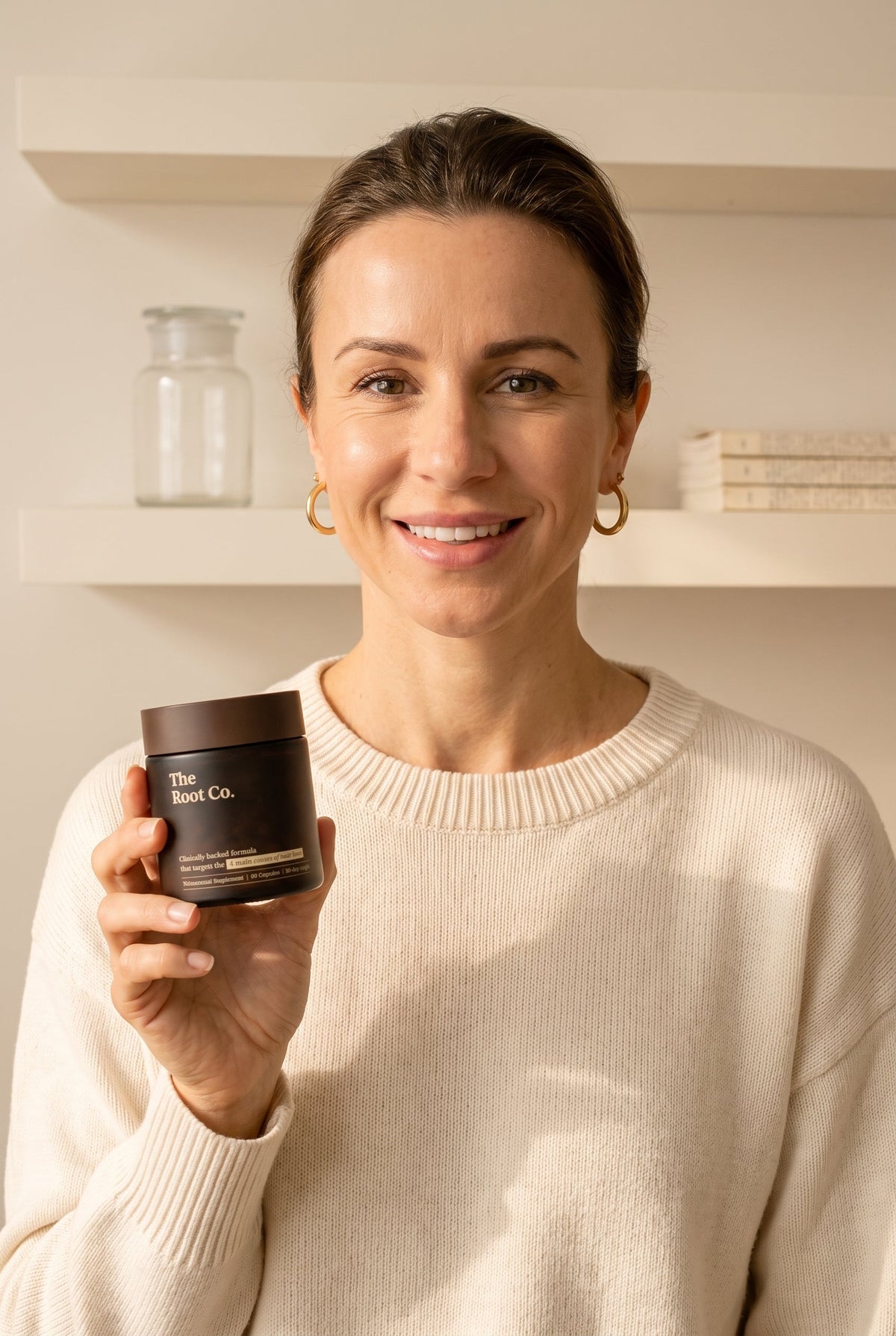
Best Hair Growth Pills: What They Are, How They Work, and Which Ones Are Worth Considering

What changed · October 5, 2026
- Updated The Root Co. formula details to match the product label.
- Added results from our 9-month study of 38 adults.
- Corrected The Root Co. capsule details: vegan and biotin-free.
- Updated The Root Co. price to $49.90 a month on subscription.
- Rechecked OLLY, Bosley MD and Nature's Bounty prices on their own sites.
This guide is in two parts. First, what hair growth pills actually are - how they work in the hair cycle, which ingredients matter, and what results are realistic. Then, once that is clear, the specific pills worth considering - how we evaluated them, and which fits which situation.
That order matters because the biggest mistake in this category is buying a bottle before understanding why your hair is changing. Get the cause right first, and the product choice gets a lot simpler.
What are hair growth pills, and do they actually work?
Hair growth pills are oral supplements designed to support hair health, reduce shedding, and improve thickness over time. They can help, but they do not work equally well for every kind of hair loss.
Whether a pill helps depends on three things: why your hair is thinning, whether the follicles are still active, and whether you take it consistently for several months. A supplement may be useful for diffuse shedding, early hormonal thinning, stress-related shedding, or nutritional gaps. It is much less likely to do much for areas that have been completely bald for years.
Many people search for one product that works for all hair loss. That is usually where disappointment starts. Temporary shedding after stress, postpartum recovery, and long-term pattern thinning behave differently. A pill that helps one may only partly help another.
Hair shedding vs. hair thinning: why the distinction matters
Hair shedding means more hairs than usual are falling out. Hair thinning usually means follicles are gradually producing finer, shorter strands over time, a process called miniaturization.
That distinction matters because pills often help fastest when the problem is shedding rather than advanced miniaturization. If you notice extra hair in the shower, on your pillow, or in your brush after an illness, a stressful period, or childbirth, that can fit telogen effluvium, a form of shedding that often starts two to three months after a trigger. If your part has been widening slowly for years or your crown is gradually showing more scalp, that is more consistent with pattern thinning.
What hair growth pills can and cannot do
Hair growth pills may support active follicles, but they do not replace diagnosis, prescription treatment, or in-office procedures when those are needed.
What they may do
- reduce excess shedding over time
- support follicles that are still active but stressed
- help when nutritional gaps are part of the picture
- complement topicals or other treatments
What they cannot do
- diagnose thyroid disease, iron deficiency, or alopecia
- regrow hair from follicles that are permanently lost
- replace minoxidil, finasteride, or procedures in advanced cases
- deliver meaningful results in two weeks
If your hair loss is sudden, patchy, painful, or severe, a supplement should not be the first or only step.

The Root Co. Hair Vitamin
Daily support for fuller-looking hair
Biotin-free and vegan. Just 2 capsules a day.
$49.90/month with subscription 90-day money-back guarantee
How do hair growth pills work, and which ingredients matter?
Hair growth pills work by trying to improve the conditions around the hair cycle, not by forcing instant growth. Hair grows on a timeline measured in months, which is why even a good formula looks slow at first. The cycle has four phases: anagen (growth), catagen (transition), telogen (rest), and exogen (shedding).
A supplement usually tries to influence one or more of the pathways that affect those phases. Common targets include nutritional gaps, DHT (dihydrotestosterone)-related follicle stress, inflammation, and stress-related cycle disruption. The American Academy of Dermatology's guidance on hair shedding is helpful for understanding why shedding often appears months after a trigger rather than immediately.
The best ingredients usually focus on specific pathways rather than vague beauty language. What matters is not whether a label sounds premium. It is whether the ingredients match the likely cause.
| Ingredient type | What it does | Best for |
|---|---|---|
| Zinc | Supports normal cell turnover and hair-relevant enzyme activity | People with nutritional gaps or diffuse shedding |
| Vitamin D3 | Supports normal follicle cycling and is often discussed when shedding is persistent | Readers with low vitamin D risk or low sun exposure |
| Magnesium | Supports general metabolic and stress-related pathways | Stress-related shedding support |
| DHT-focused botanicals | May help support follicles exposed to hormonal stress | Pattern thinning in men and women |
| Anti-inflammatory botanicals | May help support a healthier follicle environment | Early thinning where inflammation may be a contributor |
A broader formula such as The Root Co. Hair Growth Vitamins pairs zinc (15 mg, as zinc picolinate), magnesium and vitamin B5 with Phyllotex, a patented blend of acai, green coffee bean, olive leaf and pau d'arco extracts, in 2 biotin-free capsules a day.
Why biotin-only formulas often disappoint
Biotin can help when someone is actually deficient, but biotin-only formulas often disappoint because most thinning is not caused by low biotin alone.
That is the gap between marketing and mechanism. Many readers have already tried biotin, keratin, collagen, or a generic beauty blend and seen little change. If your hair loss is being driven more by hormones, inflammation, stress, menopause, or a post-illness shedding cycle, a single nutrient is often too narrow. That is one reason The Root Co. is built as a biotin-free, multi-ingredient formula rather than a biotin-first supplement.
Who are hair growth pills for?
The best hair growth pills depend on the pattern behind the change. Shopping by celebrity endorsement or bottle design is rarely useful.
For women with shedding or diffuse thinning
Hair growth pills for women may be a good fit when follicles are still active and the issue looks like postpartum shedding, perimenopausal thinning, or stress-related shedding. These situations often involve some mix of temporary cycle disruption, nutrient depletion, hormonal shifts, and increased shedding before visible regrowth begins. A broad oral supplement can make sense here, especially if you want a non-topical option and your loss is still early to moderate.
For men with pattern thinning
Hair growth pills for men are usually judged by one question: do they address DHT? In male pattern thinning, especially at the crown or front, DHT-related miniaturization is a major driver. That does not mean every man needs a prescription immediately. Some start with an oral supplement, some add minoxidil, and some discuss finasteride with a clinician. If a man wants a non-pharmaceutical option first, a multi-pathway formula may be a reasonable starting point.
When sudden, patchy, or severe loss needs a dermatologist first
Sudden, patchy, or severe hair loss deserves medical evaluation before supplement shopping. A pill may still play a supportive role, but it should not be your only plan. Causes can include alopecia areata, thyroid disorders, iron deficiency, medication-related shedding, or scarring alopecia. The AAD's hair loss overview gives a useful category-level breakdown.
Get checked sooner if the loss is patchy or circular, painful, itchy, or scar-like, very sudden, tied to a new medication, or paired with fatigue or weight changes. If you are pregnant, nursing, taking prescription medication, or experiencing significant hair loss, talk with your healthcare provider before starting a new supplement.
How long do hair growth pills take, and what is realistic?
Hair growth pills usually take at least a few months to judge properly. Reduced shedding often comes before obvious regrowth.
| Time window | What you may notice | What it usually means |
|---|---|---|
| First 30 days | Often very little visible change | Too early for density changes in most cases |
| By 60 days | Less hair in the shower or brush | Shedding may be slowing |
| By 90 days | Baby hairs, a less visible part, early thickening | Some active follicles may be cycling back into growth |
| Months 4 to 6 | More obvious thickness and density | Longer-timeline changes start to show |
As one example, The Root Co. ran a 9-month single-group study of 38 adults with no placebo group, and hair count in thinning areas reached about 2.6 times baseline; the clinical study summary walks through how it was measured. The broader point holds across the category: the first sign of progress is usually less shedding, not instant fullness, and many people quit in the window when the biology is moving but the mirror is still catching up.
Why some people do not respond well
Some people do not respond because the product does not match the cause, the follicles are too far miniaturized, or an underlying issue has gone untreated. Common failure points include inconsistent use, stopping before 90 days, advanced pattern loss, untreated iron deficiency or thyroid issues, and relying on a narrow formula for a multi-cause problem.
Now: which hair growth pills are actually worth considering?
Everything above was about how these pills work and what is realistic. Below are the specific products, how we evaluated each one, and which fits which situation.
How we chose these hair growth pills
Before the picks, here is the checklist we used. Mechanism, dose, evidence, and fit matter far more than packaging.
- Are the active ingredients specific and clearly named?
- Does the formula target more than one pathway?
- Is the daily serving realistic to stick with for months?
- Are ingredient forms listed, such as zinc picolinate or magnesium citrate?
- Does the brand give a real timeline instead of promising speed?
- Is there any patent, clinical reference, or transparent evidence?
How pills compare with minoxidil, finasteride, PRP, and laser
Pills are one category in a larger landscape, often a good fit for people who want systemic support, early intervention, or a non-topical option:
- Minoxidil: over-the-counter topical support, often useful but requires ongoing use
- Finasteride: prescription DHT blocker, often stronger for male pattern loss but not right for everyone
- PRP: in-office injections, higher cost, mixed response
- Laser devices: non-drug option, but usually expensive and slower to assess
- Pills: convenient and broad, especially if nutrition, hormones, stress, and inflammation overlap
The pills that fit different needs, at a glance
| Product | Best for | Best price | Daily dose | Guarantee |
|---|---|---|---|---|
| The Root Co. | Biotin-free daily formula | $49.90/mo | 2 capsules | 90 days, full refund |
| Nature's Bounty Hair Growth | Beauty-first retail capsule | No price on brand site | 1 capsule | Brand satisfaction |
| OLLY Ultra Strength Hair | Retail, NSF-certified | $16.99/mo | 1 softgel | 30 days |
| Bosley MD Hair Growth (Women) | DHT-aware, brand heritage | $35.70/bottle | 1 capsule | Not stated |
The best hair growth pills by use case
The Root Co. Breakthrough Hair Vitamin: Best Value
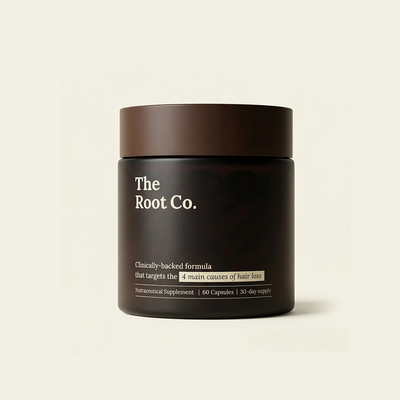
The Root Co. Breakthrough Hair Vitamin
$49.90/mo with subscription · 2 capsules daily · 90-day guarantee
The Root Co. is a US-patented hair growth supplement that pairs Phyllotex, a 345 mg blend of acai, green coffee bean, olive leaf and pau d'arco extracts, with zinc, magnesium and vitamin B5 in 2 biotin-free capsules a day. Three things make it the value pick: an issued patent (not "pending"), a full 90-day refund window (no questions asked), and a subscription price of $49.90 a month, below most premium and prescription options.
It puts several ingredients to work in one bottle rather than leaning on a single nutrient, and the label lists each dose: 15 mg of zinc (136% DV), 85 mg of magnesium, 5 mg of vitamin B5 and 345 mg of Phyllotex. Full formula detail is in the formula explained.
- Phyllotex 345 mg: acai 5:1, green coffee bean, olive leaf, pau d'arco 4:1, plus zinc picolinate 15 mg, magnesium 85 mg, vitamin B5 5 mg
- Biotin-free and keratin-free by design; vegan, no shark cartilage
Pros
- Issued US patent (not pending)
- 90-day full money-back guarantee, no questions asked
- 9-month study of 38 adults: hair count in thinning areas reached about 2.6x baseline (single group, no placebo)
- Only 2 capsules daily; $49.90/mo with subscription
- Works on all hair types, including textured and tightly coiled
Considerations
- Newer brand; smaller customer base than legacy drugstore names
- Individual mg doses live in the formula article, not the PDP
- No NSF Certified for Sport certification
- Single SKU (no life-stage segmentation)
Nature's Bounty Hair Growth: Best beauty-first retail capsule

Nature's Bounty Hair Growth
Sold at retailers, no price on brand site · 1 capsule daily · 30 capsules (1 month)
From the self-described "#1 brand for hair, skin & nails," this once-daily capsule uses an "Advanced Hair Complex" of biotin, silicon, and arginine, and is marketed as clinically shown to help grow thicker, fuller hair in three months. It is a simple, widely available beauty-first option rather than a multi-cause hair-loss formula, and it leans heavily on biotin.
Pros
- Once-daily capsule; easy to stick with
- Biotin, silicon, and arginine for structural support
- Well-known brand, widely available at retail
Considerations
- Beauty-first, not a multi-cause hair-loss formula
- Leans on biotin; does not target DHT or stress
- Sold via retailers, so price varies
OLLY Ultra Strength Hair: Best at Retail (NSF-Certified)

OLLY Ultra Strength Hair Softgels
$19.99 one-time / $16.99 subscription, 30 softgels (1 month) · 1 softgel daily · 30-day returns
OLLY is the easy-to-find, sensibly-priced retail pick. The softgel blends biotin, keratin, zinc, vitamin D, B12, and folic acid, so it is broader than a biotin-only product, and it is NSF Certified, a real third-party quality mark most competitors here lack. The trade-offs: exact doses appear only on the supplement-facts image, and keratin's oral benefit has thin evidence.
Pros
- Biotin, keratin, zinc, vitamin D, B12, folic acid
- NSF Certified for quality and label accuracy
- Sugar-free, gluten-free, one softgel a day
Considerations
- Exact doses only on the facts-panel image
- Keratin's oral benefit is weakly supported
- Short 30-day return window
Bosley MD Healthy Hair Growth for Women: Best DHT-Aware Pick

Bosley MD Healthy Hair Growth for Women
$42 one-time / $35.70 subscription · 1 capsule daily
From Bosley, the long-running hair-restoration brand, this women's formula is built to "fight hair loss from within" with DHT-inhibiting botanicals plus biotin, niacin, and zinc, rounded out with horsetail (silica), MSM, and amino acids (L-lysine, L-cysteine). It is more hair-loss-aware than a plain beauty gummy, though the biotin dose is modest (300 mcg) and no money-back guarantee is stated.
Pros
- DHT-inhibiting botanicals plus biotin, niacin, and zinc
- Horsetail (silica), MSM, and amino acids round out the formula
- From a recognizable hair-restoration brand; one capsule a day
Considerations
- Modest biotin dose; single-capsule serving
- No money-back guarantee stated; free shipping only over $65
- Contains gelatin (not vegetarian)
Consider a multi-cause pill like The Root Co. if your thinning is early to moderate, you want an oral formula instead of a topical, you have already been disappointed by biotin-only products, and you are willing to give it three to six months. Consider something else first if your hair loss is sudden or patchy, you have advanced bald areas, or you likely need prescription treatment or a diagnosis first.
Daily support for fuller-looking hair
Just 2 capsules a day. Biotin-free and vegan.
In our 9-month study of 38 adults, hair count in thinning areas rose to about 2.6x the starting level. Single group, no placebo. See the study
90-day money-back guarantee · Cancel anytime
FAQ
Do hair growth pills actually work?
They can, especially for shedding, early thinning, or cases where nutrition, stress, inflammation, or hormonal pathways are involved. They work best when follicles are still active and the formula matches the reason your hair is changing.
How long does it take for hair growth pills to show results?
Most people need at least 60 to 90 days to judge early progress. Reduced shedding may show up first, while visible regrowth or thicker density often takes three to six months.
What are the best hair vitamins for faster hair growth?
The best formulas are usually not the ones promising the fastest results. Look for vitamins and botanicals that target likely causes, such as zinc, vitamin D3, magnesium, and DHT-focused or anti-inflammatory plant ingredients, rather than a generic beauty blend.
Are hair growth pills better than biotin?
Often, yes. Biotin can help in deficiency states, but many cases of thinning involve more than biotin alone. A broader formula usually makes more sense when hormones, stress, inflammation, or multiple nutrient gaps may be involved.
What are the best hair growth pills for men?
For men, the best hair growth pills usually address DHT-related follicle stress while also supporting overall hair health. They are often most useful in early crown or frontal thinning, especially for men who want to try a non-pharmaceutical option before or alongside other treatments.
Can hair growth pills help with postpartum or stress-related shedding?
They may help, especially when follicles are still active and the shedding pattern fits telogen effluvium. In these cases, a supplement may support recovery, but realistic expectations matter because the hair cycle still moves slowly.
Prices and product details verified on June 30, 2026 against each brand's own product page; third-party retailer prices are approximate and vary. Not medical advice. These statements have not been evaluated by the Food and Drug Administration. This product is not intended to diagnose, treat, cure, or prevent any disease.
Read more

Finasteride vs minoxidil explained clearly: how they work, side effects, timelines, and when one or both may make sense for hair loss.

Compare the best hair growth serums for thinning, shedding, scalp health, minoxidil alternatives, realistic results, and what pills to pair with them.