What is the best vitamin for hair growth, really?
The best vitamin for hair growth depends on why your hair is thinning in the first place. No single nutrient works for every kind of shedding, widening part or early pattern thinning, so the useful question is which nutrient matches what is going on with your hair.
Hair growth is shaped by several overlapping factors: nutrient intake, DHT (dihydrotestosterone, a hormone made from testosterone), stress, scalp inflammation, age and genetics. That is why blanket advice like "just take biotin" so often disappoints. Someone with low vitamin D, someone shedding after a stressful few months and someone with early pattern thinning will not respond to the same approach.
It also helps to separate two goals that tend to get blurred. General hair support means giving the follicle the nutrients it needs to do its job. Addressing active hair loss means working out why the follicle is under pressure in the first place. If you are looking for vitamins for hair growth and thickness, a supplement can support stronger growth where there is a nutritional gap, and it works best alongside an answer to the second question.
Hair growth support is not the same as treating hair loss
Vitamins help most when low intake, low nutrient levels or recovery from stress is part of the picture. Diffuse shedding after an illness, after pregnancy or after a period of intense stress often improves as the hair cycle settles and nutrition catches up. Patchy hair loss, scarring hair loss or advanced pattern baldness is different, and it needs a dermatologist's evaluation and sometimes prescription or in-office treatment.
The American Academy of Dermatology's overview of hair loss types is a useful reminder that "hair loss" is a category, not a single problem.

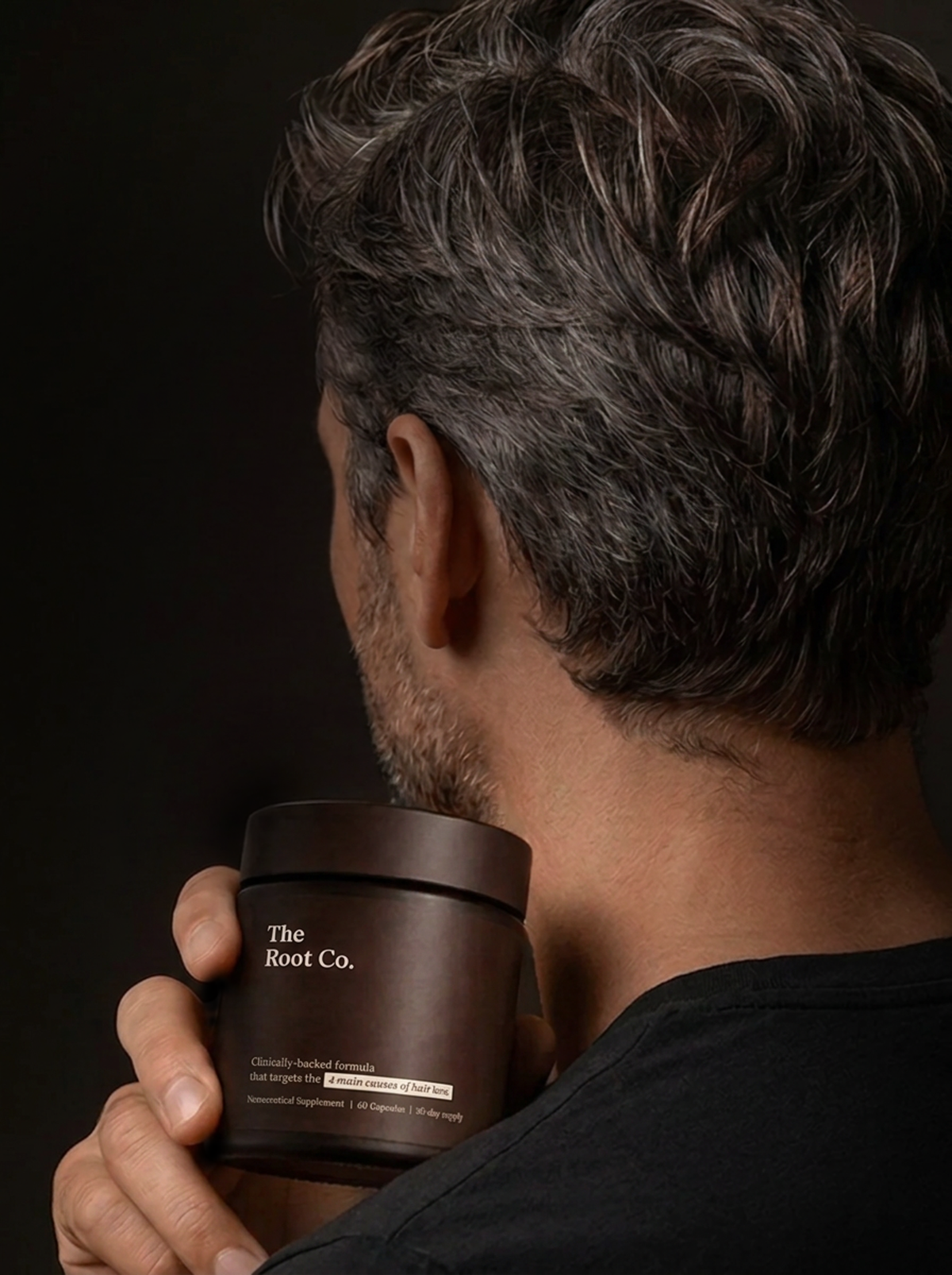
The Root Co. Hair Vitamin
Daily support for fuller-looking hair
Biotin-free and vegan. Just 2 capsules a day.
$49.90/month with subscription 90-day money-back guarantee
Why biotin-only advice often falls short
Biotin is probably the most common first purchase in this category, and on its own it is rarely the whole answer for adults with thinning hair. Most hair loss is not caused by a lack of biotin, and biotin deficiency is uncommon. People reach for it because it is familiar and heavily marketed, not because it matches the most likely cause of their shedding.
Biotin is not useless. It is oversold. The more useful question is not "does this have biotin?" but "does this formula list every dose, and can I keep taking it every day?"
Which vitamins and minerals matter most for hair growth?
The nutrients most often linked to healthy hair growth are vitamin D, iron, zinc and some B vitamins, with vitamin C playing a supporting role. Hair follicles are among the most active tissues in the body, and they rely on a steady supply of nutrients to cycle normally. "Important" does not mean "take more than you need", though. Hair supplements help most when they correct or support a real gap.
| Nutrient | What it does | When it may matter most |
|---|---|---|
| Vitamin D | Supports normal follicle cycling and immune function | Diffuse shedding, little sun exposure, low blood levels |
| Iron | Carries oxygen to fast-growing tissue such as hair follicles | Heavy periods, low-meat diets, fatigue alongside shedding |
| Zinc | Supports tissue repair and normal hair growth | Low intake, prolonged shedding, plant-heavy diets |
| B vitamins | Help with energy metabolism and cell turnover | Diet-related gaps or broader nutrition support |
| Vitamin C | Helps your body absorb iron from plant foods | Low fruit and vegetable intake, low iron |
Vitamin D, iron, zinc and B vitamins
Vitamin D for hair growth gets a lot of attention because vitamin D plays a part in creating the cells that develop into hair follicles, and low levels come up often in people with shedding and diffuse thinning. It is relevant without being magic.
Iron matters most for women with heavy periods, low-meat diets or postpartum depletion. Low iron status is a common finding in hair loss workups, and a blood test is the way to confirm it rather than guessing from symptoms.
Zinc supports normal tissue growth and repair, and our guide to zinc for hair loss covers the research and the daily amounts in detail. B vitamins, including pantothenic acid (vitamin B5), help turn food into the energy that fast-growing tissue relies on.
This is one reason broader formulas often make more sense than single-ingredient products. The Root Co. Hair Vitamin, for example, combines 15 mg of zinc (136% of the daily value), 85 mg of magnesium and 5 mg of vitamin B5 with Phyllotex, a 345 mg patented plant blend (US Patent 11,160,750), taken as 2 capsules a day. It is biotin-free and vegan, and in a 9-month single-group study of 38 adults with no placebo group, hair count in thinning areas reached about 2.6 times the starting level.
The Root Co. vs Nutrafol vs Vegamour
| Feature | The Root Co. | Nutrafol | Vegamour |
|---|---|---|---|
| Taken as a capsule, nothing to apply | ✓ | ✓ | ✕ |
| Two capsules a day | ✓ | ✕ | ✕ |
| Biotin-free | ✓ | ✓Women Advanced | ✕ |
| Under $50 a month on subscription | ✓ | ✕ | ✓ |
| Start for $49.90/mo |
Compared with Nutrafol Women Advanced and Vegamour GRO Hair Serum.
Can too much of a vitamin cause hair loss?
Yes, more is not always better. Consuming too much vitamin A can cause hair loss, which is worth knowing before you stack a multivitamin, a hair gummy and a skin supplement on top of each other. If you suspect a shortfall, ask your doctor to check levels such as ferritin and vitamin D before starting high-dose supplements, and stick to products that list every dose on the label.
What about collagen, keratin and biotin?
Collagen, keratin and biotin are popular, and they are not always the most meaningful place to start. Biotin is useful mainly when intake is poor or a deficiency is present. Oral keratin is marketed for hair strength but is not a complete plan for active hair loss. Collagen can add to general protein intake for some people, but on its own it is not a hair-specific formula.
If your goal is vitamins for hair growth and thickness, start with nutrients that have a plausible link to the hair growth cycle, then choose a formula that lists every dose and fits a routine you will keep for six months.
Who may benefit from a vitamin for hair growth, and who may need something else?
A vitamin for hair growth makes the most sense when your follicles are still active and the thinning is early, diffuse or tied to a stressor you can recover from. Sudden, patchy, painful or advanced hair loss needs a medical answer first.
When supplements make the most sense
Supplements are a reasonable choice for postpartum or hormonal shedding, where the loss is diffuse and the part looks wider. They suit stress-related shedding, the temporary shedding that often starts two to three months after a major stressor, illness, surgery or diet change. They also fit early to moderate thinning while the follicles are still producing hair, diet-related gaps when meals have been inconsistent or restrictive, and anyone who wants a non-topical option to use alongside other approaches.
This is where most interest in supplements for hair loss in females comes from. Many women are not looking for a miracle. They want a realistic, daily option for shedding tied to hormones, stress or nutritional depletion.
When to see a dermatologist first
See a dermatologist before self-treating if you have:
- sudden or severe shedding
- patchy bald spots
- scalp pain, burning or itching
- signs of scarring, such as shiny areas or missing follicle openings
- hair loss that started after a medication change
- hair loss with fatigue, major cycle changes or unexplained weight shifts
Cleveland Clinic's overview of telogen effluvium explains one common type of diffuse shedding. If you are pregnant, nursing, taking prescription medication or managing a known medical condition, talk to your healthcare provider before adding a new supplement.
How long does a vitamin for hair growth take to work?
Most hair growth vitamins take at least 3 months to show anything visible, and fuller results often take 6 months or longer. Hair grows on a cycle measured in months, not days, which is why consistency matters more than any single dose.
What results may look like month by month
| Timeline | What you may notice | What it usually means |
|---|---|---|
| Month 1 to 2 | A steady routine, with little visible change yet | The hair cycle turns over slowly, so early weeks are about consistency |
| Month 3 | Less hair in the brush or the shower for some people | The point where early changes may start to show |
| Month 4 to 6 | Hair feels fuller or styles better | Density and thickness become easier to judge |
| Month 6 and beyond | More visible thickness and scalp coverage | Consistent use over a full hair cycle |
This is also why most hair vitamins fail for the people who take them: many stop early, before the biology has had time to show anything.
Where a vitamin helps most
Supplements work best in early to moderate thinning, where the follicles are still producing hair, even if those hairs have become finer or shorter. A vitamin cannot regrow hair on follicles that are permanently inactive or scarred, and an area that has been smooth and bald for years needs prescription or procedural treatment rather than a supplement.
How to choose a hair growth supplement without wasting money
Start with the likely cause of your hair changes, not with the loudest marketing claim. Good formulas are clear about what is inside, how much you take and what they are designed to do. Before you buy, check whether every nutrient and dose is listed, whether the routine is specific, how long you are willing to stay consistent before judging, and whether there is measured evidence behind the product or only testimonials.
A simple framework for comparing options
Single-nutrient products make sense if you already know you are low in one specific nutrient, usually from a blood test. Broader hair vitamins suit general support when your diet has been inconsistent and you want a more complete nutrient base. Multi-ingredient formulas combine several nutrients with botanical extracts in one daily routine, and that is where The Root Co. sits: zinc, magnesium and vitamin B5 with the Phyllotex blend, in 2 capsules a day. For a wider look at the market, our roundup of the best hair growth vitamins compares the main formulas side by side.
Daily support for fuller-looking hair
Just 2 capsules a day. Biotin-free and vegan.
In our 9-month study of 38 adults, hair count in thinning areas rose to about 2.6x the starting level. Single group, no placebo. See the study
90-day money-back guarantee · Cancel anytime
FAQ
What is the best vitamin for hair growth?
The best vitamin for hair growth depends on the cause. Vitamin D, iron, zinc and some B vitamins are the nutrients most often linked to healthy hair, but no single vitamin works for every kind of thinning or shedding.
What vitamin am I lacking if my hair is falling out?
Shedding alone cannot tell you. Iron (measured as ferritin), vitamin D and zinc are the levels most commonly checked when hair is falling out, and a blood test is the reliable way to find a shortfall before you pick a supplement.
Does vitamin D help with hair growth?
Vitamin D supports normal hair follicle cycling, and it matters most when your levels are low. It is relevant to hair growth, and it works best as part of a wider plan rather than on its own.
How long does it take for hair growth vitamins to work?
Plan on at least 3 months before you notice early changes, and 6 months or more for visible thickness. Hair grows on a cycle measured in months, so daily consistency matters.
Do hair growth vitamins work for thinning hair in women?
They can, especially for postpartum shedding, stress-related shedding, diet-related gaps or early, diffuse thinning. Sudden, patchy or severe loss is worth showing a dermatologist first.
Can a vitamin for hair growth regrow hair on bald spots?
Usually not where a follicle is permanently inactive or scarred. Vitamins support follicles that are still active, which is why they work best in early to moderate thinning.
These statements have not been evaluated by the Food and Drug Administration. This product is not intended to diagnose, treat, cure, or prevent any disease.