
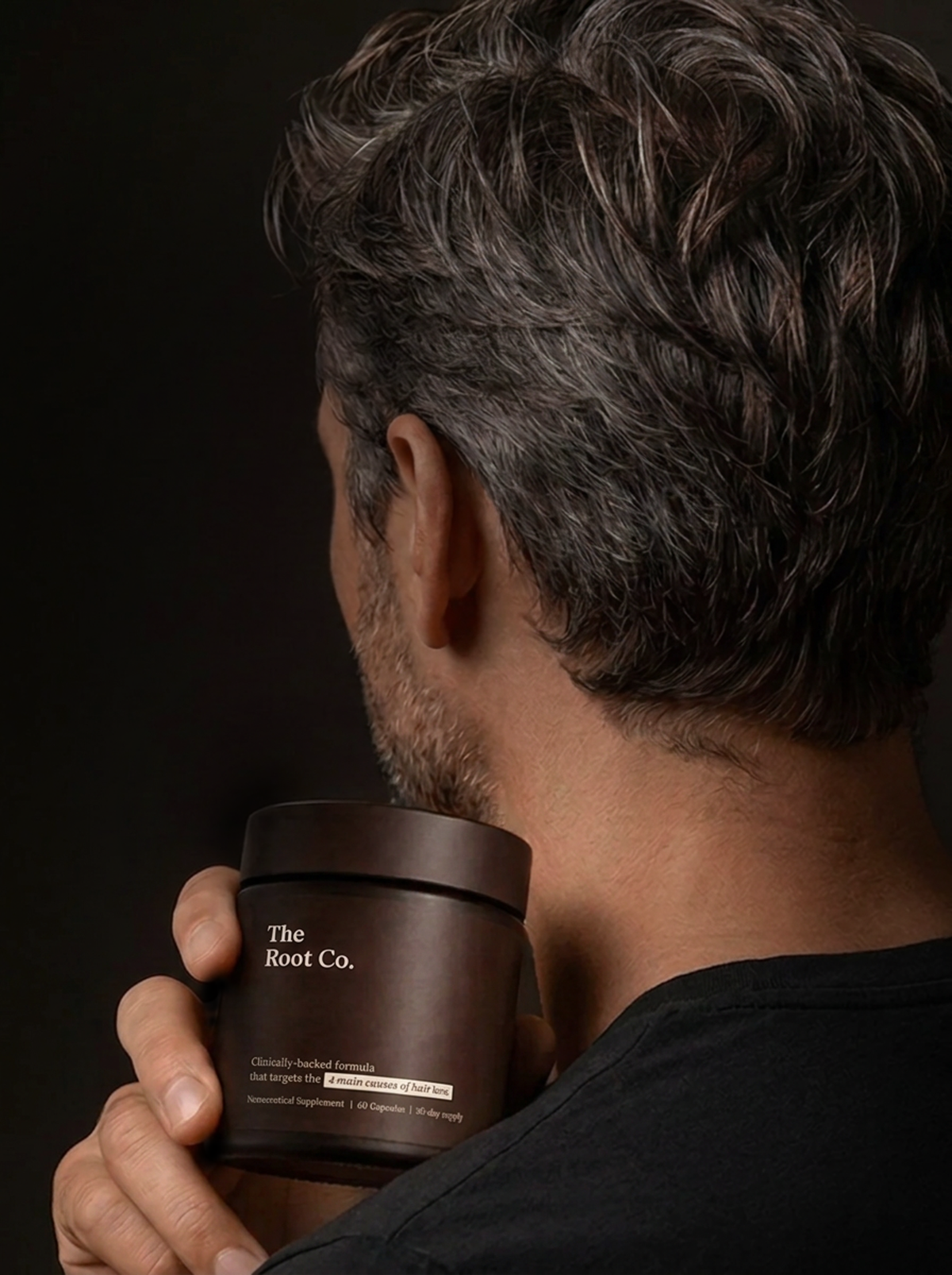
Magnesium for Hair Growth: Does It Work, Best Forms & Dosage

Editorial disclosure: The Root Co. publishes this article and sells a hair supplement that contains magnesium. Dr. Yehoshua Maor is the named inventor of the Phyllotex patent, and The Root Co. Hair Vitamin contains a Phyllotex blend. For that reason, the medical information below rests on the public clinical and medical sources linked in the text.
Magnesium and hair: what it supports, and how much you need
Magnesium is one of the nutrients your follicles run on, behind the cell division, protein building and stress response that normal hair growth depends on. It earns its place when low intake, chronic stress, poor sleep or a wider nutrition gap is part of why your hair is thinning. Where the driver is hormonal, autoimmune or medical, magnesium works alongside treatment aimed at that cause rather than in place of it. This page helps you work out which situation you are in.

Magnesium is already in this one
Two capsules a day with magnesium, zinc and vitamin B5, so you are not buying minerals one bottle at a time.
Jump to the bottom-line verdict
What does magnesium for hair growth actually do?
Magnesium is a cofactor, not an active ingredient. Harvard Health counts more than 300 chemical reactions in the body that rely on it at least in part, and WebMD's guide adds that magnesium is involved in making protein and DNA. Hair is protein built by fast-dividing cells, so anything that degrades that machinery can show up in your hair. That is a long way from magnesium switching growth on.
Three terms decide how you read the rest of this page. Hair shedding means more hairs than usual leaving the scalp, noticed in the shower, the brush or on your clothes. Hair thinning means lower density over time, a wider part or a smaller ponytail. The hair growth cycle is the repeating pattern each follicle runs through as it grows, rests and sheds.
Supporting healthy hair growth and treating a medical cause of hair loss are different jobs. A nutrient can help when a nutritional gap is genuinely part of the problem. It cannot diagnose thyroid disease, reverse scarring hair loss, or stand in for treatment of advanced pattern baldness.
How the hair growth cycle affects expectations
Hair runs on a slow biological clock, so any nutrient-related change takes months rather than weeks. That holds for magnesium, iron, vitamin D and every broader natural hair growth supplement on the shelf.
The cycle has four phases: anagen, the active growth phase; catagen, the short transition; telogen, the resting phase; and exogen, when the hair finally releases. Cleveland Clinic puts roughly 80% to 90% of follicles in anagen at any one time, and about 5% each in catagen and telogen.
If your shedding followed stress, illness, a diet change or another trigger, the fallout usually arrives two to three months after the event. That lag is why hair loss feels so confusing to date. Even where magnesium corrects part of the underlying issue, the follicle still has to walk through the cycle, which is why a fair read takes at least 2 to 3 months and a fuller one closer to 3 to 6.
Does magnesium help with hair loss or just overall health?
Magnesium helps hair loss indirectly at best, and only where magnesium status is one piece of a larger picture: poor diet quality, high stress, disrupted sleep, or general nutrient insufficiency.
That is why "does magnesium help hair growth" has no clean yes or no. It depends on cause. If your shedding tracks with restrictive eating, chronic stress or an absorption problem, improving magnesium intake plausibly supports recovery. If the driver is androgenetic alopecia, the pattern hair loss linked in part to DHT, magnesium on its own is unlikely to move much.
Can low magnesium cause hair loss?
Low magnesium is not a common direct cause of hair loss, and it does overlap with the situations where shedding gets more likely. Treat it as a possible contributor rather than the default explanation.
Correlation and causation part ways here. People under chronic stress, on poor diets, with gastrointestinal problems or chronic illness often carry both low magnesium status and hair shedding. Both can be downstream of the same strain, which is not the same as one causing the other.
Situations where magnesium status is more likely to matter:
- low overall diet quality
- very restrictive dieting
- gastrointestinal absorption problems
- chronic diarrhea or inflammatory digestive conditions
- heavy alcohol use
- prolonged high stress
- medications that affect nutrient balance, including long-term proton pump inhibitors
Hair loss on its own is a poor way to self-diagnose magnesium deficiency. It is one nonspecific clue, and rarely more than that.
Signs of low magnesium that may show up alongside shedding
The symptoms of low magnesium are broad and they are not diagnostic on their own, which is why the full pattern matters more than any single item on the list.
- muscle cramps or twitching
- fatigue
- poor sleep
- headaches
- feeling more stress-sensitive than usual
- constipation in some cases
- slower exercise recovery
None of those prove a deficiency. If shedding arrives alongside several of them, the useful move is reviewing diet, medications and overall health with a clinician rather than reasoning backwards from one symptom.
Other nutrient gaps that commonly get mistaken for a magnesium problem
Shedding is more often tied to broader nutrient issues than to magnesium specifically, and narrowing in on one mineral is how people miss the real reason. Iron, especially low ferritin, is the classic one. Vitamin D, zinc, vitamin B12 and plain protein intake are the others clinicians look at.
Someone searching magnesium for hair growth may in fact be dealing with iron deficiency, low vitamin D, thin protein intake, or several mild shortfalls running at once. Reviewing your overall nutrition for hair growth catches more of those than testing one mineral does.
What does the research say about magnesium and hair growth?
One randomized trial has measured magnesium supplementation against hair, and it found nothing. In a 2022 trial published in Reproductive Biology and Endocrinology, researchers randomly assigned 64 women with polycystic ovary syndrome to 250 mg of magnesium oxide a day or a matched placebo for 10 weeks, scoring alopecia on the Sinclair Scale. Quality of life improved. In the authors' words, "No significant effect was observed on acne, alopecia, and AUB."
That is a single 10-week trial in one population, at a dose and form chosen for a different question, so it does not prove magnesium can never help anyone's hair. It does mean the marketing claim has never been demonstrated, and you should treat any page that says otherwise with suspicion.
Searches like "magnesium grew my hair back" are understandable, and before-and-after stories still do not establish cause. Hair improves because a trigger resolved, a deficiency was corrected, stress came down, sleep got better, or several habits changed at once.
Dermatology guidance keeps pointing back at cause for exactly that reason. The American Academy of Dermatology notes that it is normal to shed between 50 and 100 hairs a day, that excessive shedding is usually telogen effluvium following a stressor, and that most people notice it a few months after the event, with fullness returning within six to nine months as the body readjusts.
When anecdotal magnesium hair growth stories may make sense
Anecdotal improvement makes sense when magnesium was one of several things that changed. The hair result can be real even where magnesium was not the reason for it.
- a true or mild deficiency got corrected
- sleep improved, which helped stress recovery
- crash dieting stopped and protein intake went back up
- several nutrient gaps were addressed together
- the shedding was temporary and already resolving
Read anecdotes as clues. The improvement is often genuine and the explanation is almost always more crowded than "magnesium regrew my hair".
Magnesium spray, magnesium oil and scalp use: is there evidence?
Topical magnesium has thinner evidence for hair than oral magnesium or food, and claims about magnesium spray, "scalp calcification" or dramatic regrowth from scalp application are not supported by published work.
Magnesium spray and magnesium oil are marketed mainly for local comfort and relaxation. There is no good evidence that putting magnesium on the scalp changes follicle biology in any reliable way. If magnesium status is relevant to you, whole-body intake is the lever that actually exists.
What is the best magnesium for hair growth, and how much do you need?
There is no hair-specific form of magnesium. The best magnesium for hair growth is the oral form you tolerate well enough to take every day, at a dose that respects the ceiling.
The NIH Office of Dietary Supplements sets the adult RDA at 400 mg a day for men aged 19 to 30 and 420 mg from 31 onward, and at 310 mg a day for women aged 19 to 30 and 320 mg from 31 onward. It also sets a Tolerable Upper Intake Level of 350 mg a day for everyone aged 9 and over, and that ceiling covers supplements and medications only: NIH states the ULs "do not include magnesium found naturally in food and beverages". So a supplement dose well under 350 mg leaves room for the magnesium in your dinner.
| Magnesium form | Usually chosen for | Practical note |
|---|---|---|
| Glycinate | Gentler daily use, especially where sleep or stress is part of the picture | Generally well tolerated and a common default |
| Citrate | General supplementation and good absorption | Can loosen stools, which is why the serving size matters |
| Oxide | Budget products and constipation | Less well absorbed and more likely to cause GI upset |
| L-threonate | Cognitive and brain-health positioning | No hair-specific advantage over the others |
Food first is still reasonable advice. Magnesium-rich foods bring protein, other minerals and fiber with them, so they improve diet quality on more than one axis at a time.
Best food sources of magnesium for healthy hair
The best food sources of magnesium are ordinary whole foods, and the eating pattern matters more than any single item.
- nuts, especially almonds and cashews
- seeds, especially pumpkin and chia
- legumes such as black beans and lentils
- leafy greens such as spinach
- whole grains, wheat germ and oat bran
- cacao and dark chocolate in moderate amounts
Harvard notes that one serving of spinach, an ounce of almonds and a banana together supply 190 mg of magnesium, which is close to 60% of the daily recommendation for women and 45% for men.
Zinc and magnesium for hair growth: why combinations sometimes make more sense
Zinc is the mineral with the better hair evidence of the two, because low zinc status is directly linked to shedding and weaker regrowth. Our guide to zinc for hair loss covers the doses, the forms and the 40 mg ceiling in full.
The reason searches pair the two minerals is sound even where the reasoning is loose. Hair depends on nutrient patterns, and iron matters for oxygen delivery, vitamin D shows up in most shedding workups, and protein supplies the material the follicle is actually building with. One mineral rarely covers that spread.
How to use magnesium for hair growth realistically
Treat magnesium as steady background nutrition, then judge your hair against the cause of the shedding rather than against the mineral. What you get from getting magnesium right is a body that is not running short, which is a precondition for hair rather than a treatment for it.
The first changes are usually not in your hair at all. People tend to notice better sleep, fewer muscle cramps, slightly steadier stress tolerance, and a change in bowel regularity depending on the form. Anything hair-related arrives later.
If you are pregnant, nursing, have kidney disease or a digestive condition, or take prescription medication, talk with your healthcare provider before starting any supplement. Magnesium interacts with bisphosphonates, tetracycline and quinolone antibiotics, and kidney impairment raises the risk of excess. Sudden, significant or patchy hair loss deserves medical evaluation first. These statements have not been evaluated by the Food and Drug Administration. This product is not intended to diagnose, treat, cure, or prevent any disease.
How long does magnesium take to help hair?
Give it at least 2 to 3 months for any signal and 3 to 6 months for a fair verdict, because that is how long the hair cycle takes to show a change.
That timeline is follicle biology, not a statement about product quality. A faster claim is not a better intervention. In hair supplements, speed claims are where trust usually breaks.
When magnesium alone is probably not enough
Magnesium alone will not carry hair loss that has a strong hormonal, medical or structural driver. It may still support the rest of the plan, and it will not be the plan.
- androgenetic alopecia
- sudden patchy loss
- postpartum shedding
- thyroid-related hair loss
- iron deficiency
- long-standing advanced thinning
- scarring alopecia
Cleveland Clinic's guidance on telogen effluvium makes the same point from the other side: identify the stressor, and most cases resolve within six to eight months once it is addressed.
When a broader formula may make more sense than magnesium by itself
A broader formula makes sense when you would otherwise be buying three or four separate bottles to cover the same ground, and when you want every dose printed on one panel instead of spread across four labels you have to reconcile yourself. That is the common position for adults who have already tried a biotin-only product and got nowhere, and it is also the position of anyone reading about scalp inflammation and hair loss, stress and nutrition in the same week and wondering where to start.
The Root Co. Hair Vitamin prints its doses per 2-capsule daily serving: zinc as zinc picolinate 15 mg, magnesium 85 mg as magnesium citrate, pantothenic acid as vitamin B5 5 mg, and a 345 mg Phyllotex blend of acai fruit, green coffee bean, pau d'arco bark and olive leaf extracts. The Phyllotex blend is covered by US Patent 11,160,750. The capsules are vegan and biotin-free, the product is third-party tested and made in the USA, and it runs $49.90 a month on subscription or $59.90 one-time, with 90 days to return it. Our formula explainer walks through what the label does and does not disclose, and the full brand review covers the evidence behind it.
The 85 mg of magnesium there is a disclosed nutritional contribution on a panel, not a hair-growth claim. It sits comfortably under the 350 mg supplemental ceiling, which is the reason the dose is modest rather than headline-grabbing. Give any supplement 3 to 6 months, and see a dermatologist first if your hair loss is patchy, rapidly progressive, or advanced enough to need prescription or in-office care.
85 mg of magnesium, 15 mg of zinc
Magnesium as a daily top-up and zinc at 136% of the daily value, with vitamin B5 and a 345 mg botanical blend, at $49.90 a month.
Magnesium for hair growth: bottom-line verdict
- Magnesium supports hair indirectly, through the enzymes and protein synthesis that hair depends on, and no published trial shows that supplementing it grows hair.
- The one randomized trial that measured hair gave 64 women with PCOS 250 mg of magnesium oxide a day for 10 weeks and found no significant effect on alopecia.
- NIH puts the adult RDA at 400 to 420 mg a day for men and 310 to 320 mg for women, with a 350 mg ceiling from supplements and medications that is counted separately from food.
- Topical magnesium spray and magnesium oil have weaker evidence for hair than oral intake or food, so whole-body intake is the lever worth pulling.
- A single mineral fits a single confirmed gap. Where several gaps are in play, one disclosed panel beats four bottles, and sudden, patchy or painful hair loss needs a dermatologist before any supplement.
FAQ
Does magnesium help with hair loss?
Magnesium may help indirectly when low intake, stress, poor sleep or broader nutritional gaps are contributing to shedding. It is not a hair loss treatment, and the one randomized trial that scored alopecia directly found no significant effect, so it is unlikely to do much on its own for advanced pattern loss or medical causes.
What is the best magnesium for hair growth?
There is no hair-specific best form. A well-tolerated oral form such as magnesium glycinate or citrate is usually the practical choice, because consistency matters more than the name on the bottle. Keep supplemental magnesium under the 350 mg daily ceiling NIH sets for adults unless a clinician advises otherwise.
How long does magnesium take to work for hair growth?
Any hair-related effect would take at least 2 to 3 months, with a better checkpoint at 3 to 6 months. Hair grows slowly, and nutrient-related changes move at the speed of the hair cycle rather than the speed of the supplement.
Can low magnesium cause hair loss?
Low magnesium can overlap with hair shedding, and it is not one of the most common direct causes. It matters more in the context of poor diet, chronic stress, digestive problems or broader nutrient insufficiency, and hair loss on its own is not a reliable way to diagnose it.
Do magnesium sprays or magnesium oil help hair growth?
Evidence that topical magnesium improves hair growth is weak. Magnesium spray and magnesium oil are marketed mostly for local comfort and relaxation. If magnesium status matters for you, oral intake or food-based support is the sensible place to focus.
Should I take zinc and magnesium for hair growth together?
Sometimes, because hair health usually depends on several nutrients at once rather than one. Zinc has the stronger hair evidence of the two, and both make the most sense inside a broader plan that starts from the actual cause of your shedding rather than from a supplement aisle.
Sources
Medical and scientific sources
- Magnesium: fact sheet for health professionals. NIH Office of Dietary Supplements.
- Jaripur M, et al. The effects of magnesium supplementation on abnormal uterine bleeding, alopecia, quality of life, and acne in women with polycystic ovary syndrome: a randomized clinical trial. Reprod Biol Endocrinol, 2022;20:110. PMID 35918728.
- What can magnesium do for you and how much do you need? Harvard Health Publishing, June 2025.
- Magnesium supplement guide. WebMD.
- Do you have hair loss or hair shedding? American Academy of Dermatology.
- Telogen effluvium. Cleveland Clinic.
Product information
- The Root Co.: Supplement Facts label and product page, September 2026.
If you are pregnant, nursing, taking prescription medication, or experiencing sudden or significant hair loss, consult your healthcare provider before adding a new supplement to your routine. Sudden hair loss can sometimes be a sign of an underlying condition worth investigating. The Root Co. Hair Vitamin contains pau d'arco. If you are pregnant, breastfeeding or take blood-thinning medication, discuss its use with your healthcare provider first. This article is educational and not a substitute for personalized medical advice. These statements have not been evaluated by the Food and Drug Administration. This product is not intended to diagnose, treat, cure, or prevent any disease.
Read more
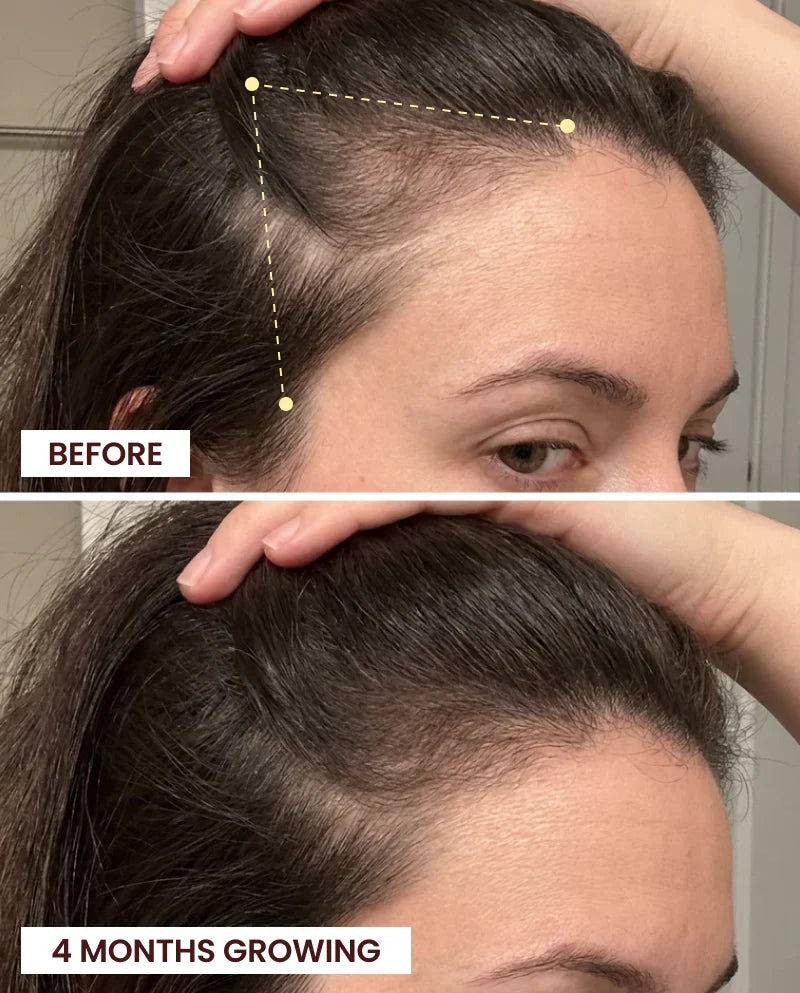
Learn when zinc can help hair loss in women, how much to take, signs of deficiency, and when iron, thyroid issues or hormones may be the real cause.
What is the best vitamin for hair growth, really? The best vitamin for hair growth depends on why your hair is thinning in the first place. No single nutrient works for every kind of shedding, wi...