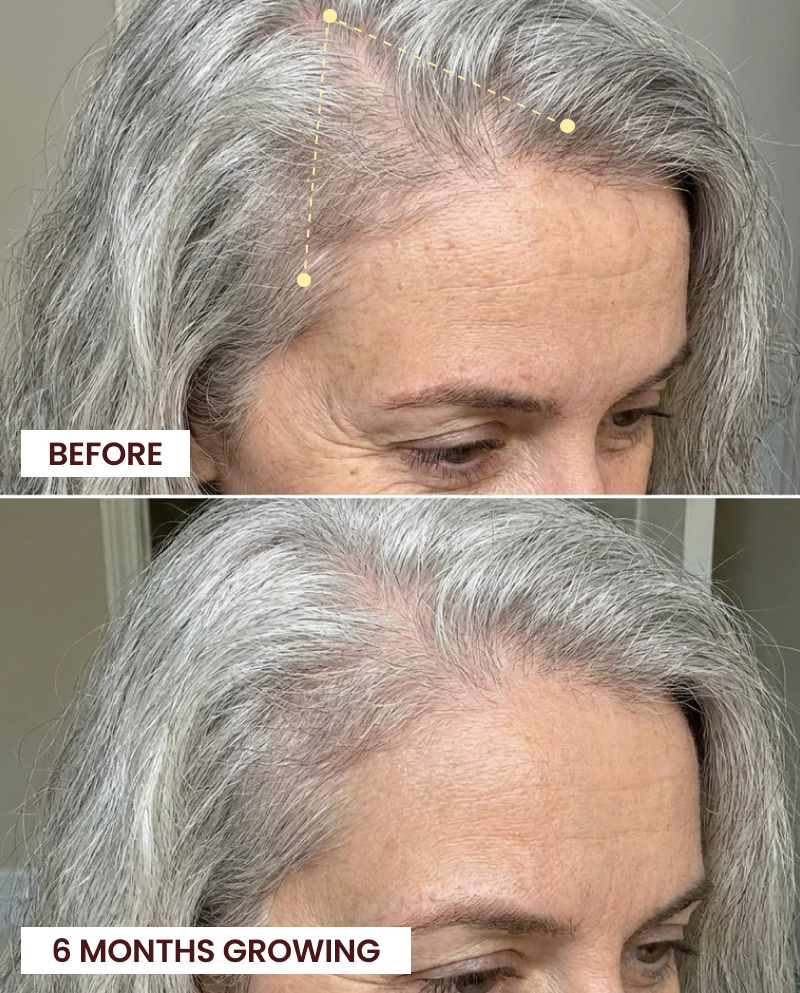
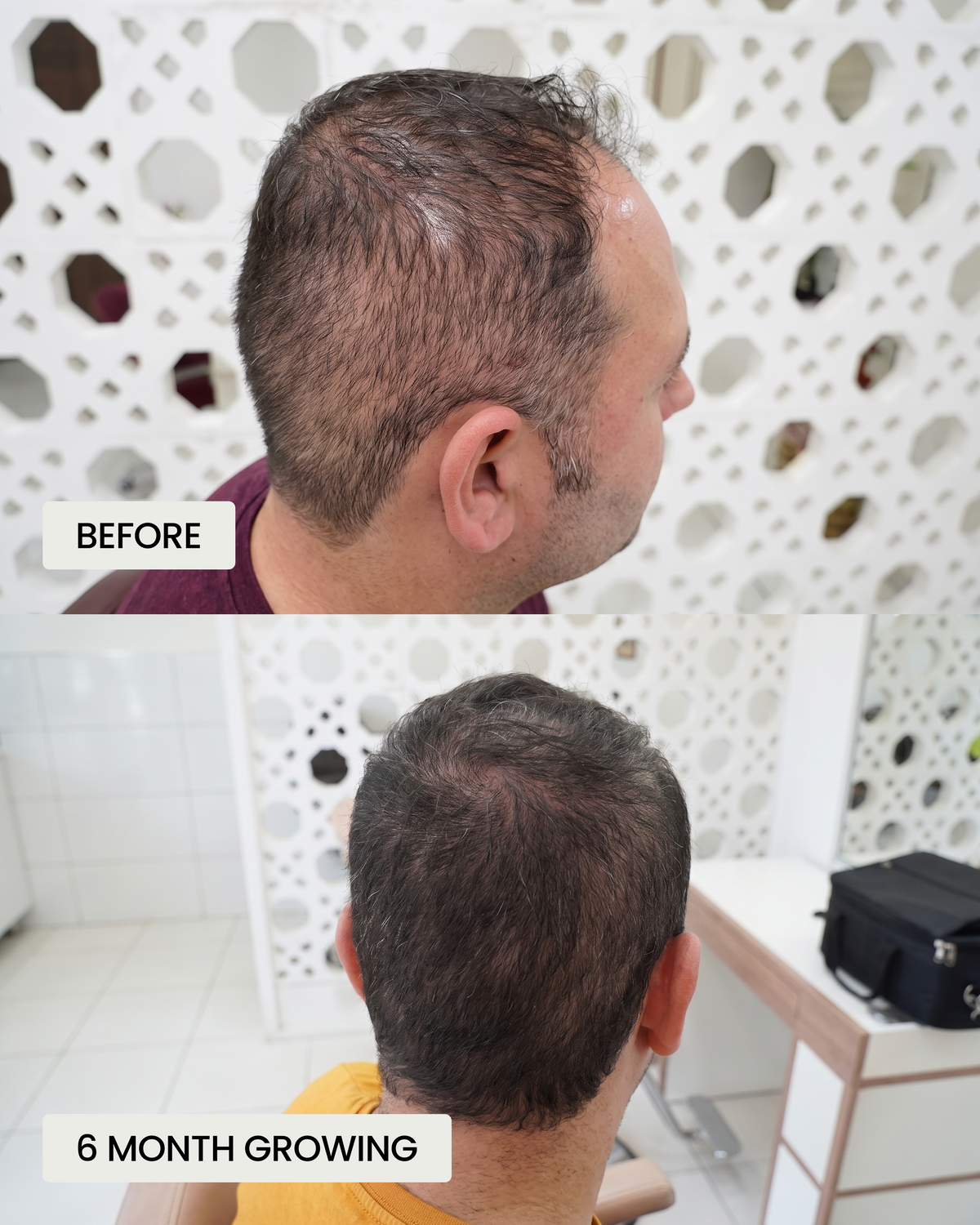
Hair growth supplements for men: what to look for, what to expect and when they help

Editorial disclosure: The Root Co. publishes this article and sells a hair supplement. Dr. Yehoshua Maor is the named inventor of the Phyllotex patent, and The Root Co. Hair Vitamin contains a Phyllotex blend. For that reason, the medical information below rests on the public clinical and medical sources linked in the text.
Hair growth supplements for men: what to look for, what to expect and when they help
Hair growth supplements for men are oral formulas meant to support hair from the inside, which sets them apart from shampoos and serums that work on the surface of the scalp. Most hair vitamins for men combine minerals, B vitamins and plant extracts, with the aim of supporting the internal factors that affect how hair grows and sheds.
Whether one can help you depends on what is going on. Supplements make the most sense for early to moderate thinning or a spell of increased shedding, particularly when hair loss has contributors such as stress, inflammation or early DHT-related thinning, or when gaps in nutrition for hair growth are part of the picture. They are not a realistic fix for follicles that have been inactive for years.
So the cause is the thing to work out first, because a formula can only help with the problem it was built for.
Jump to the bottom-line verdict
What causes hair thinning in men?
Men often lose hair for more than one reason at the same time. The most common cause is DHT (dihydrotestosterone, a hormone made from testosterone), which drives androgenetic alopecia, also called male pattern hair loss. DHT binds to receptors in sensitive follicles and gradually shrinks them over repeated growth cycles.
Other common drivers include:
- Stress-related shedding, often called telogen effluvium, where a stressful event pushes more hairs into the shedding phase
- Nutritional gaps, especially when zinc, vitamin D or other nutrients that hair relies on are low
- Inflammation, which can disrupt the scalp environment around the follicle
- Post-illness shedding, which often starts two to three months after a major illness or fever
- Age-related changes, as strands get finer and density drops over the years
Hair loss is often multifactorial. A man can carry a genetic tendency toward pattern thinning and still have his shedding made worse by stress or by recovery from an illness.
Shedding vs. male pattern hair loss: why the difference matters
Shedding and male pattern hair loss are different problems, and knowing the difference between hair shedding and hair loss helps you choose the right approach. Shedding means more hairs than usual are falling out. Male pattern hair loss means the follicles are slowly miniaturizing, so they produce thinner, shorter hairs over time.
A quick way to tell them apart:
- Shedding often feels sudden, with more hair in the shower, on the pillow or in the sink, so it helps to know how much hair shedding is normal before you worry
- Male pattern hair loss is usually slower, and it shows up as crown thinning, temple recession or less density on top
A supplement plays a different role in each case. With stress or post-illness shedding, the goal is usually to help the hair cycle settle back to normal. With pattern thinning, the goal is broader support, and a supplement sits alongside the DHT-focused treatments covered further down rather than replacing them. That is why one generic hair pill does not fit every situation.
Which hair vitamins for men are worth looking for?
The ingredients that matter most are the ones that map to real causes of thinning. In practice that means some mix of nutrient repletion, DHT-related support, inflammation support and stress support, rather than one trendy ingredient on its own.
If you are searching for vitamins for hair growth and thickness, the practical test is whether a formula uses nutrients and botanicals with a clear role in hair biology, and whether the label tells you exactly what is inside.
Do men need DHT support in a supplement?
Men with pattern thinning need a plan for DHT, and that plan usually starts with a doctor rather than a supplement. DHT is the best-known driver of androgenetic alopecia in men, especially when thinning shows up at the temples, the crown or the top of the scalp.
Finasteride has the strongest evidence for lowering DHT and is covered below. A supplement can support the rest of your routine alongside it.
Which vitamins and minerals support hair growth and thickness for men?
The most useful vitamins and minerals for men are usually the ones that correct a real gap. Zinc, magnesium, vitamin D and pantothenic acid (vitamin B5) all play practical roles in normal hair and skin biology. The International Society of Hair Restoration Surgery says true vitamin deficiencies are uncommon in people with a normal diet, and that high-dose biotin can distort some lab tests.
| Ingredient type | What it does | Most relevant when |
|---|---|---|
| Zinc | Supports normal cell turnover and tissue health relevant to hair follicles | Dietary intake is low or a deficiency has been documented |
| Magnesium | Supports enzymes involved in normal cell growth, including hair growth | Stress is high or overall nutrient intake is low |
| Vitamin D | Supports normal immune and follicle-related function | Vitamin D levels are low, which is common in many adults |
| Pantothenic acid (B5) | Supports energy metabolism and healthy skin and hair structure | You want broader nutritional support rather than a single-issue fix |
| Botanical extracts | Evidence varies widely by extract and by formula. | You want a formula that combines several ingredients |
These ingredients do the most when they close a real gap, which is why the label matters more than the marketing.
Why single-ingredient hair pills often disappoint
Single-ingredient pills often disappoint because male hair loss is rarely caused by one issue alone. A man might assume he just needs biotin, but if his thinning is driven mainly by DHT and stress, biotin on its own is unlikely to do much, and that mismatch is a big part of why most hair vitamins fail.
Biotin is one of the most overused ingredients in the category. Biotin deficiency is relatively uncommon, and many men taking biotin for hair loss are not deficient in it. A broader formula can make more sense when the problems overlap, such as pattern thinning plus stress, or shedding plus a nutrient gap.
How to choose the best hair growth supplement for men
The best hair growth supplement for men is usually the one with the clearest mechanism rather than the loudest marketing. Look for a transparent ingredient list and a clear daily dose, along with reasonable safety information and some evidence that goes beyond before-and-after photos. You can see how several brands line up in our roundup of the best hair growth supplements.
A simple set of questions to ask of any label:
- Does the formula explain which causes of thinning it is meant to address?
- Are the active ingredients clearly listed, with their amounts?
- Is the serving size obvious, such as 2 capsules a day?
- Is it third-party tested, and does the brand say where it is made?
- Is there a patent, a clinical study or other credible published support?
- Does it avoid miracle timelines and vague promises?
What kind of evidence should you trust?
Evidence comes in grades. Peer-reviewed data is strongest for understanding hair biology and whole treatment categories. Brand-run studies can be useful, but they describe one product under one set of conditions and are not universal proof. Customer reviews show real-world experience without proving cause and effect, patents show novelty rather than guaranteed outcomes, and influencer claims are the weakest evidence of all.
Our own product shows how to read a brand study. The Root Co.'s Phyllotex blend was measured in a 9-month single-group study of 38 adults, including 16 men aged 30 to 50, with no placebo group, so it cannot establish how much of the change was caused by the supplement.
The formula is also covered by US Patent #11,160,750.
How men compare supplements to Nutrafol, Viviscal, and newer formulas
Men usually compare supplements on a handful of practical points:
- Nutrafol is one of the best-known brands and has published placebo-controlled trials, and Nutrafol reviews show how buyers rate it in daily use
- Viviscal has been sold far longer than newer brands, and our Viviscal vs Nutrafol comparison puts the two side by side
- Some formulas focus mostly on nutrients, while others also try to cover DHT, inflammation and stress
- A money-back guarantee lowers the risk of trying a new formula
- Price matters, but the most expensive option is not automatically the best fit
Nutrafol tends to lead on brand recognition and published research, and Viviscal on time in the market. Newer formulas may stand out by being more focused, or by suiting people who are tired of biotin-heavy products.
When a multi-mechanism formula may be worth considering
A multi-mechanism formula may be worth considering when your hair loss does not look purely genetic or purely nutritional. If your thinning seems to involve DHT, stress, shedding and a general decline in hair quality all at once, a broader formula has a more logical case.
The Root Co. Hair Vitamin is a drug-free supplement with no biotin or keratin, and it is vegan. A bottle holds 60 capsules, which is one month at 2 capsules a day. It is made in the USA and costs $49.90 a month on subscription, with a 90-day money-back guarantee. It suits men who want an oral option and a routine they can keep for 3 months or more.

A 2-capsule hair vitamin for men
The Root Co. Hair Vitamin is 2 biotin-free, vegan capsules a day, with no prescription and nothing to apply to your scalp.
What results should men realistically expect from a hair growth supplement?
Hair growth supplements for men work on a slow clock, because hair grows in months-long cycles. The first realistic sign is usually less shedding, and density comes later.
Early progress may look like:
- Less hair in the shower or on the pillow
- Less visible shedding when styling or washing
- Small regrowth near the hairline
- Slightly better fullness on top over time
For advanced pattern hair loss, medical treatment comes first, and a supplement fits alongside it.
How long does a hair growth supplement for men take to work?
A realistic timeline has checkpoints at 30, 60, 90 and 180 days, not 10 days or 2 weeks, because hair moves through its growth cycle phases over months.
| Timeline | What you may notice | How to interpret it |
|---|---|---|
| First 30 days | Often little visible change | Too early for most men to judge regrowth |
| By 60 days | Reduced shedding may become noticeable | An early sign the approach may be helping hair cycling |
| By 90 days | Small regrowth, baby hairs, or improved density in some areas | A more useful checkpoint for deciding whether to continue |
| By 180 days | More visible thickening or better scalp coverage | A fairer window for judging moderate cosmetic change |
What if you do not see results?
If nothing has changed by 90 days, the fit is usually the reason. Common causes:
- You are dealing with a different type of hair loss than the formula suits
- You stopped before the 90- to 180-day window
- You took it inconsistently
- The follicles were already too miniaturized
- An untreated issue such as thyroid disease, low ferritin, illness or a medication change is driving the shedding
If your hairline has been receding for years and there is a lot of bare scalp, or if you have rapid patchy loss, the next step may need to be medical rather than another supplement.
Will you need to keep taking it?
Usually, yes, if whatever is driving the thinning is still there. A supplement supports the conditions around hair growth while you take it, and that support ends when you stop.
The same is true of other non-permanent hair treatments, and a short course is not expected to create permanent results. If a formula is helping because it covers an ongoing nutritional gap or a long stretch of stress, stopping may gradually undo those gains.
When should men consider supplements, prescriptions, or a dermatologist instead?
Supplements fit best as one option in a broader hair loss toolkit. Some men do well starting with a supplement, while others should move faster toward minoxidil, finasteride or a dermatologist evaluation, depending on how severe the loss is and what pattern it follows.
A more useful question than "supplement or doctor?" is what stage you are at and which cause you are trying to address.
Supplement vs. minoxidil vs. finasteride: what is the difference?
These options work in different ways:
- Supplements aim to support internal contributors such as nutrient status, stress and inflammation, and some formulas also aim at DHT-related mechanisms
- Minoxidil is a topical treatment that helps stimulate hair growth locally
- Finasteride is a prescription medication that reduces DHT levels and is commonly used for male pattern hair loss
In practical terms:
- A supplement-first approach suits early thinning, increased shedding or a preference for a non-prescription option
- Minoxidil suits men who want a direct topical treatment with a long-established over-the-counter role
- Finasteride suits men whose pattern hair loss is clearly progressing and who are open to prescription treatment with a doctor's oversight
Do men need a different hair supplement than women?
Many brands sell separate formulas by sex. Nutrafol, for example, sells Men and Men 50+ formulas next to its women's range, and men's formulas often lean on ingredients linked to DHT, such as saw palmetto, because male pattern hair loss is the most common cause of thinning in men. Women's formulas are more often split by life stage, such as postpartum or 45 and older, because thinning in women is more often tied to hormone shifts, low iron or a life event.
The Root Co. uses one formula for both. Zinc, magnesium and vitamin B5 are nutrients men and women both need, the Phyllotex botanical blend is the same in every bottle, and its 9-month study enrolled 22 women and 16 men. For men with clear pattern hair loss, it fits alongside a doctor-led DHT treatment rather than in place of one.
Who is a strong fit for a men's hair supplement?
A strong fit usually looks like one of these:
- Early to moderate thinning
- Increased shedding after stress or illness
- Wanting an oral option rather than a topical
- Not being ready to take on the side effects of a prescription drug
- Wanting a supplement alongside minoxidil or another treatment
If you are comparing hair vitamins for men, The Root Co. Hair Vitamin is a vegan, biotin-free formula taken as 2 capsules a day, and the same formula is sold for women and men. It costs $49.90 a month on subscription, and the 90-day money-back guarantee lets you judge it on your own hair. Its label lists zinc, magnesium, vitamin B5 and a 345 mg Phyllotex botanical blend, detailed in our formula breakdown.
90 days to judge it on your own hair
Start at $49.90 a month on subscription, or buy the 90-day supply for $129.90 and give it a full 3 months.
When to see a dermatologist before buying another product
See a dermatologist first if your hair loss is sudden, patchy or painful, or if it comes with other scalp symptoms. That includes:
- Sudden large-volume shedding
- Patchy bald spots
- Scalp pain, itching or scaling
- Hair loss after a major illness or a medication change
- Signs of thyroid, iron or other systemic issues
- Very rapid recession or crown loss
Those situations can point to causes that a supplement should not be asked to diagnose.
Hair growth supplements for men: bottom-line verdict
- Whether a hair growth supplement fits depends on why your hair is thinning, so work out the cause before you choose a formula.
- Supplements help most with early thinning or increased shedding when a contributing factor, such as a nutritional gap or a stressful stretch, is part of the picture.
- For male pattern hair loss, minoxidil and finasteride have stronger evidence than supplements, and some men use a supplement alongside them.
- Judge any supplement over 3 to 6 months, with less shedding usually the first sign, and expect gains to fade if you stop while the cause is still there.
- See a dermatologist before buying another product if your hair loss is sudden, patchy or painful.
FAQ
Do men's hair growth supplements work?
They can, but they do not work equally well for every type of hair loss. Men with early thinning, increased shedding, a nutritional gap or stress-related shedding are more likely to benefit than men with long-standing advanced baldness, so what decides it is whether the formula matches the cause.
Which supplement is best for hair growth for men?
The best option depends on what is driving the thinning. If the pattern looks mostly DHT-driven, DHT needs to be part of the plan. If shedding, stress and nutrition are also involved, a formula that combines several ingredients may make more sense than a single-ingredient pill. The Root Co. Hair Vitamin is a biotin-free, vegan option taken as 2 capsules a day, and like any supplement it deserves three to six months before you judge it.
Can a man's hair grow back?
It depends on the cause. Shedding after stress or illness usually regrows once the trigger passes. In male pattern hair loss, the American Academy of Dermatology notes that treatments such as minoxidil and finasteride can slow loss and regrow some hair, especially when started early. Areas that have been bald for years are unlikely to regrow with supplements.
Are there prescription hair growth pills for men, and how are they different from supplements?
Yes. Prescription pills for men include options such as finasteride, which targets DHT directly. Supplements are different because they are not prescription drugs and should not be treated as replacements for them. A supplement may support hair health in general, while a prescription drug acts on a specific medical mechanism more directly. For progressing male pattern hair loss, some men use both under professional guidance.
Sources
Medical and scientific sources
- Hair loss. Cleveland Clinic.
- Male pattern baldness (androgenic alopecia). Cleveland Clinic.
- DHT (dihydrotestosterone). Cleveland Clinic.
- Nutrition and vitamins. International Society of Hair Restoration Surgery.
- Hair loss causes in men. WebMD.
- Thinning hair. WebMD.
- Slowing hair loss in men. WebMD.
- Male pattern hair loss treatment. American Academy of Dermatology.
Product information
- The Root Co.: Supplement Facts label and product page, September 2026.
If you are pregnant, nursing, taking prescription medication, or experiencing sudden or significant hair loss, consult your healthcare provider before adding a new supplement to your routine. Sudden hair loss can sometimes be a sign of an underlying condition worth investigating. The Root Co. contains pau d'arco. If you are pregnant, breastfeeding or take blood-thinning medication, discuss its use with your healthcare provider first. This article is educational and not a substitute for personalized medical advice. These statements have not been evaluated by the Food and Drug Administration. This product is not intended to diagnose, treat, cure, or prevent any disease.